


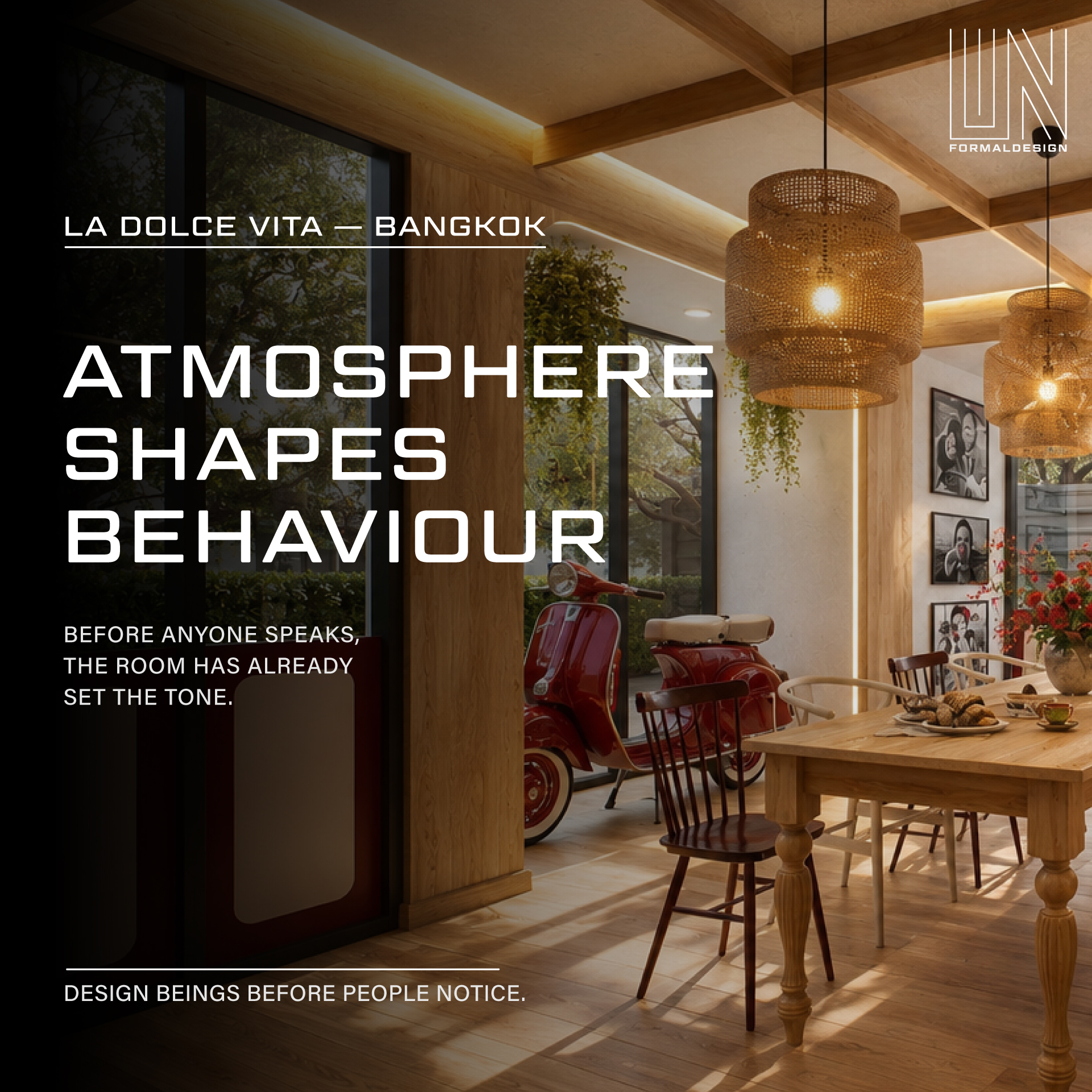
Interior design influences customer behaviour by shaping how people move, how long they stay, and how they feel before they have said a word. Light, ceiling height, layout, and material are not decoration — they are instructions the room gives the body. Warm light slows people down. High ceilings open up conversation. A dark corner creates intimacy. Unformal Design, the Bangkok studio led by Italian architect Alessio Carta, treats every hospitality interior as behavioural design: not a room to look at, but a system that quietly tells people how to act.
Atmosphere is not decoration. It is behaviour. That distinction is the whole job.
The room speaks before anyone does
A space communicates faster than a menu, a sign, or a host. Within seconds of walking in, a guest has already read the lighting, the ceiling, the spacing of the tables, and the materials — and has unconsciously decided whether to linger or leave, whisper or laugh, sit close or spread out.
> Interior design is the act of programming behaviour. The room decides how people move, linger, and feel before staff ever interact with them.
This is why two restaurants with identical food and prices can perform completely differently. One feels like a place to stay for three hours; the other empties after one drink. The difference is rarely the menu. It is almost always the design.
How specific design choices change behaviour
Every spatial decision produces a predictable behavioural response. Designing on purpose means choosing the response you want, then building the cue that triggers it.
| Design choice | Behavioural effect |
|---|---|
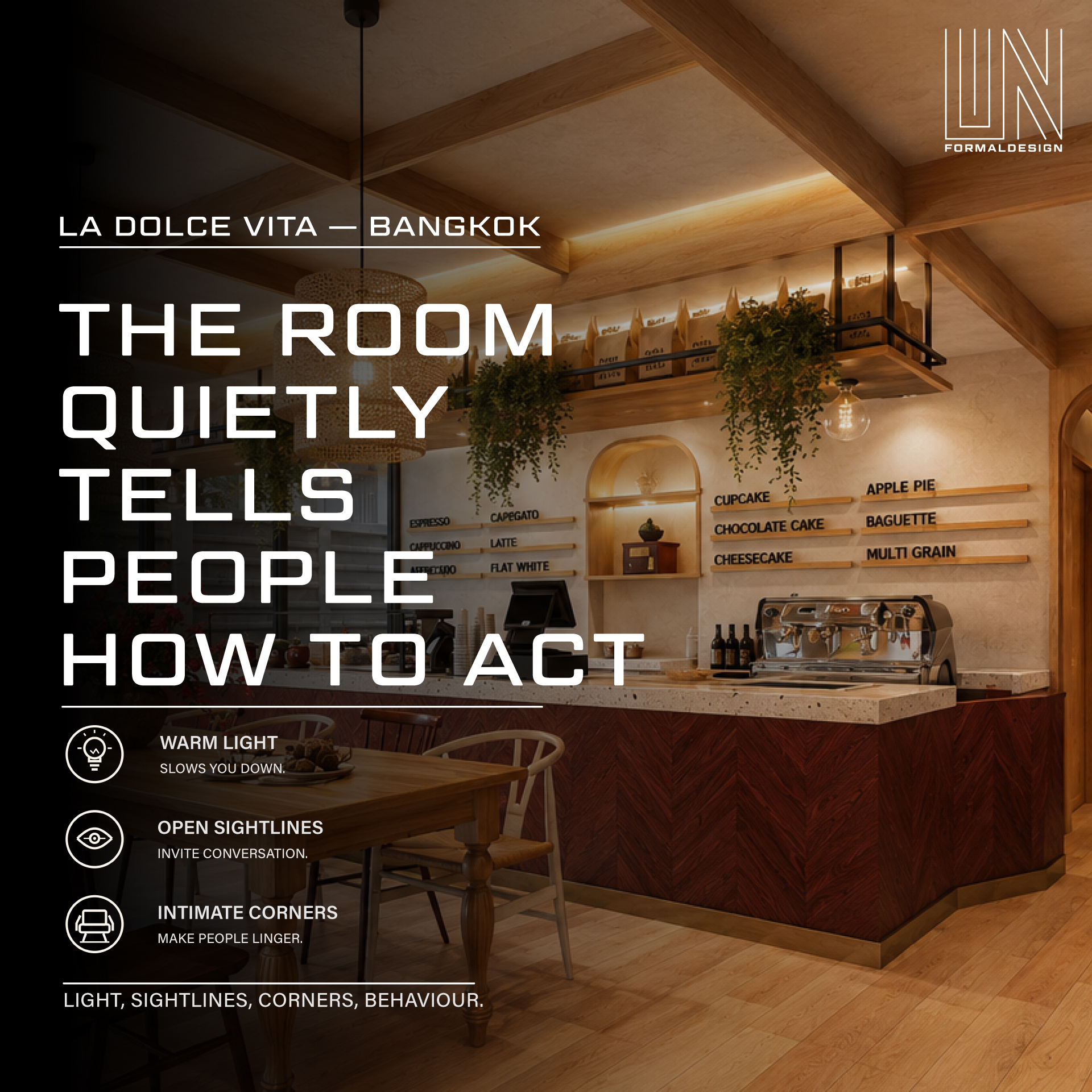
| Warm, low light | Slows the pace, encourages lingering and higher spend |
| High ceiling | Opens posture and volume — louder, more social energy |
| Low or dropped ceiling | Creates intimacy and quiet, suited to dining and conversation |
| Dark corner / booth | Signals privacy — guests stay longer, talk closer |
| Narrow entry into open room | Compression then release: a sense of arrival |
| Clear sightline to the bar | Pulls walk-ins forward, shortens hesitation |
Warm light raises dwell time, and dwell time raises spend. A guest who feels unhurried orders the second drink. That is not a marketing trick — it is a lighting and seating decision made months before opening.
La Dolce Vita: a 90sqm behaviour machine
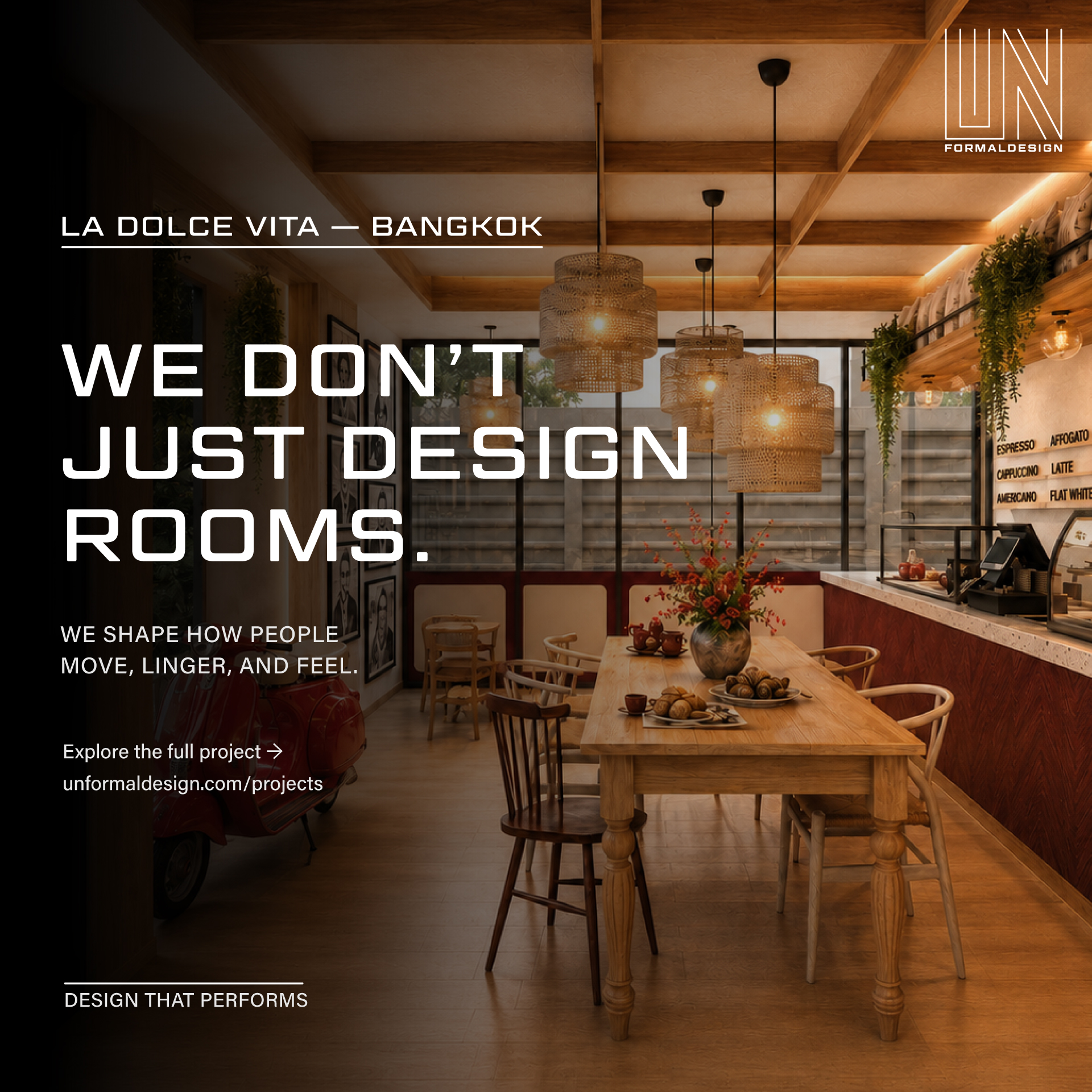
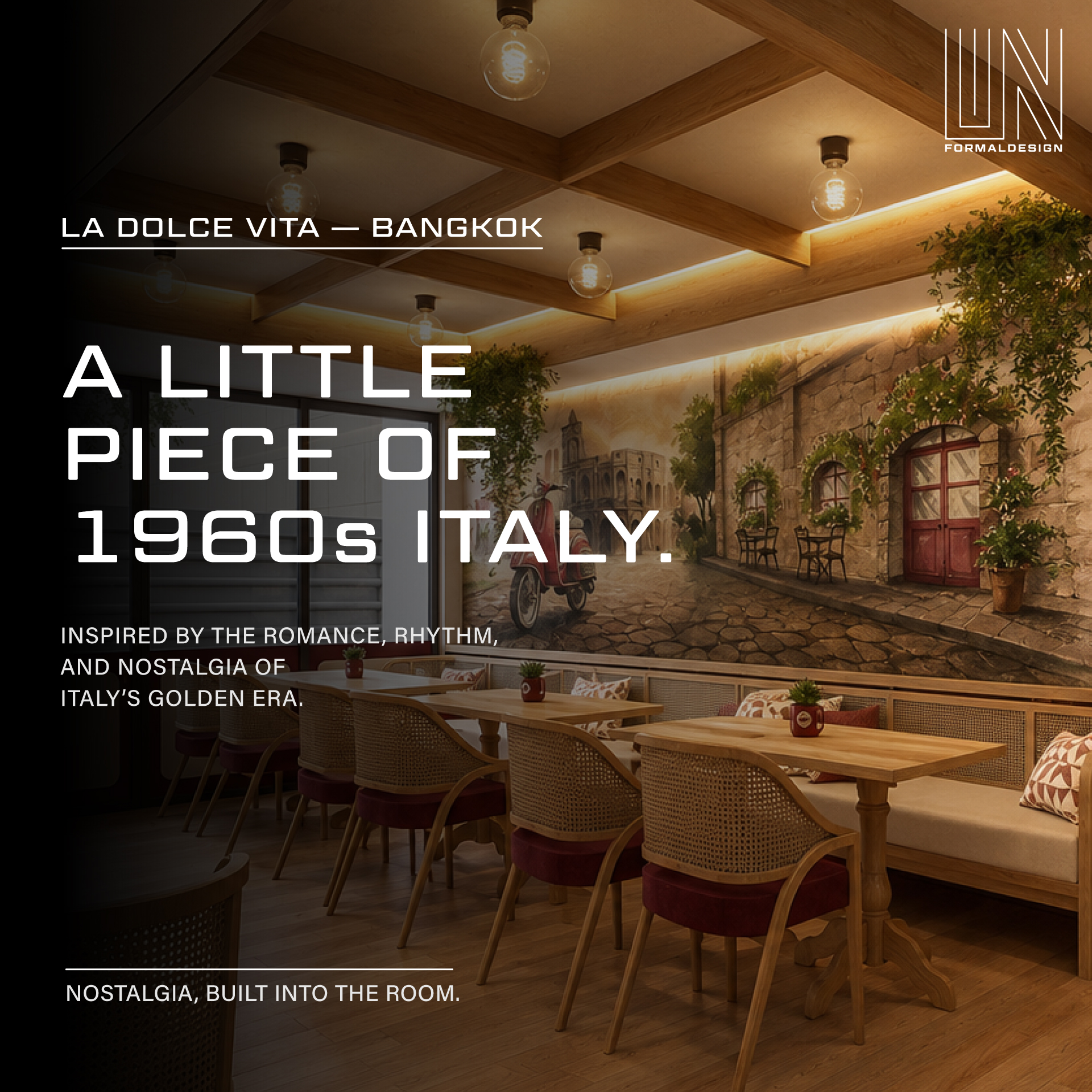
Unformal Design’s La Dolce Vita gelato and caffè in Bangkok is a clear example of behaviour shaped by design. In just 90 square metres, a red vintage Vespa, bold geometric patterns, and handcrafted furniture turn an ordinary gelato cafe into a 1960s Italian time machine. Step inside and you behave differently — you slow down, you look around, you photograph it, you stay.
The room is not decorated to look Italian; it is built to make people act like they have travelled. That is the point of a strong concept: it changes what the visitor does, not just what they see. Raw, refined, alive — the same brand DNA that runs through every Unformal project, here tuned to nostalgia and dwell.
Why this only works when concept comes first
Behaviour cannot be designed into a room after the walls are up. The behavioural goal — linger or leave, intimate or energetic, fast or slow — has to be decided at the concept stage, because it dictates the layout, the lighting plan, and the materials. Reverse the order and you get a space that looks intentional but behaves randomly.
This is the same logic behind why most restaurants fail before opening: the space was decorated, not programmed. Unformal Design begins every hospitality project with concept development precisely so behaviour is engineered from the first sketch. You can see the principle at work across the studio’s projects, from the heritage atmosphere of AILATI in Bang Rak to the retro pull of La Dolce Vita.
Frequently Asked Questions
How does interior design influence customer behaviour? Interior design influences behaviour through light, ceiling height, layout, and material, which act as unspoken cues. Warm light slows people down, high ceilings encourage social energy, and intimate corners extend stays. These choices shape how guests move, how long they linger, and how much they spend.
Does lighting really affect how long customers stay? Yes. Warm, low lighting consistently encourages guests to slow their pace and stay longer, which tends to raise spend per visit. Bright, cool lighting signals efficiency and speeds people up. Lighting is one of the strongest behavioural levers a hospitality interior has.
What is behavioural or atmosphere-driven interior design? It is design focused on what people do in a space, not just how it looks. The designer defines a target behaviour — linger, socialise, move quickly — and shapes light, layout, and material to trigger it. Unformal Design treats every hospitality space this way.
Why does behaviour have to be planned at the concept stage? Because behaviour is created by layout, lighting, and flow, which are fixed early and expensive to change later. Deciding the behavioural goal first lets every later decision serve it. Designing the look first and the behaviour later produces a room that photographs well but performs poorly.
Design the behaviour, not just the room
If you are opening a hospitality space in Thailand, decide how you want people to behave before you decide how it should look — then build the room to deliver it. Unformal Design works that way from concept to finished space. See the studio’s work at unformaldesign.com/projects, or talk to Alessio directly: alessio@unformaldesign.com / +66 97 112 3561.