


Wellness interior design in Bangkok works when calm is shaped into the room — not when serenity is implied with a few plants and soft lighting. A wellness space is judged by one thing: how it makes the body feel the moment you step in. Materials, light and proportion either settle the nervous system or they don’t, and all of them are decided in design. Unformal Design, the Bangkok studio led by architect Alessio Carta, designs wellness spaces around that single test — calm is designed, not assumed.
What a Wellness Interior Has to Do
A wellness interior has one job before any other: make a person feel calmer inside than they did outside. Unlike a restaurant built for energy or a club built for intensity, a wellness space is built for release — and release cannot be decorated on. It has to be built into the structure of the room.
> Calm is not a colour or a candle. It is the result of materials, light and proportion working as one system. Get the system right and the room settles you before you notice why.
That makes wellness design a discipline of restraint: fewer materials, softer light, honest proportion. Every element that doesn’t serve calm is removed, so the ones that remain can do their work.
Calm as a System: Materials, Light, Proportion
A wellness space performs when three elements work as one. Each is fixed in design and almost impossible to add later.
| Element | Its job | Design move |
|---|---|---|
| Materials | Lower the senses through touch | Natural, tactile, honest surfaces — nothing loud or synthetic |
| Light | Slow the body down | Soft, indirect, diffused light with no glare and gentle gradients |
| Proportion | Hold and reassure | Human-scaled, balanced volumes that feel held rather than vast or tight |
Materials calm the touch, light calms the eye, and proportion calms the body in space. Together they create a room that lowers the pulse the moment you enter — which is the only measure that matters in wellness.
Petra: Calm, Designed Not Assumed
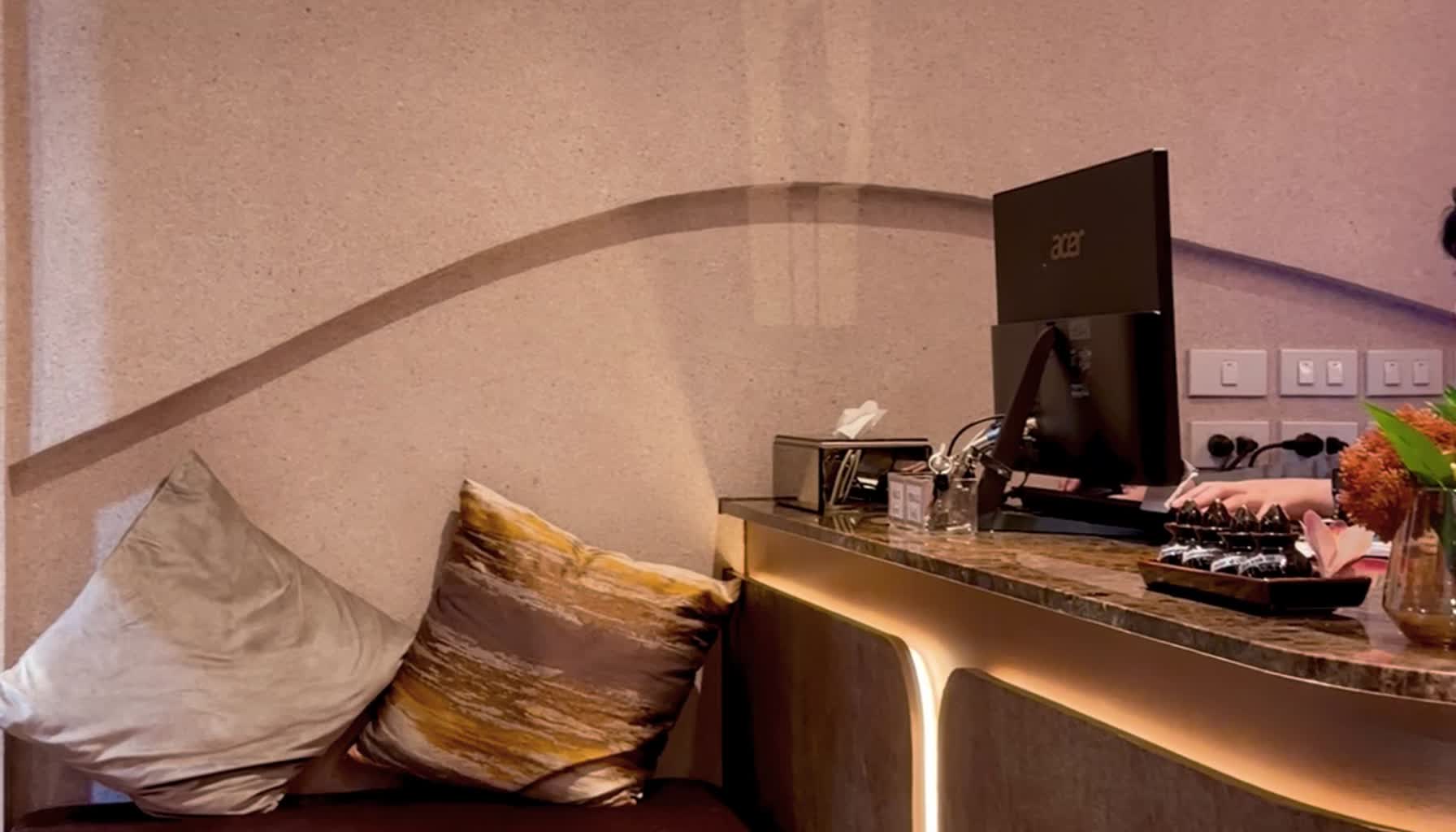
Unformal Design’s Petra Wellness Centre in Bangkok is built on exactly this principle. It is a space where stillness is shaped rather than implied — materials, light and proportion working as one unified system so that calm is the structure of the room, not a finish applied to it. Step inside and the space does the work before a single word is spoken.
The same discipline that drives the studio’s material-led approach — material as strategy, not luxury — is what lets a wellness room feel rich and quiet at once. And the studio’s instinct for honest, controlled finishes keeps the space feeling real and grounded rather than clinical.
Why the Concept Sets the Calm
A wellness space’s calm is fixed by its concept, not its decor. What should the body feel the moment it arrives, and what has to leave the room for that feeling to land? That answer drives every material, lighting and proportion decision. Skip it and you get a space that looks serene in photos but never actually settles anyone — the most common way wellness interiors fail.
That’s why Unformal Design starts every wellness project with concept development: define the feeling first, then shape the room to deliver it every single visit.
Frequently Asked Questions
What is wellness interior design? Wellness interior design builds calm into a space through materials, light and proportion rather than decoration. The goal is physiological: a room designed so the body relaxes the moment it enters. It is a system of restraint — honest surfaces, soft indirect light and human-scaled proportion — not a style of soft colours and plants.
How do you make a space actually feel calm? By shaping calm rather than implying it. Tactile natural materials settle the senses, soft diffused light with no glare slows the eye, and balanced human-scaled proportion reassures the body. Unformal Design’s Petra Wellness Centre treats these three as one unified system.
How is wellness design different from spa decoration? Decoration adds calming references on top of a generic room; wellness design builds calm into the room’s structure. The difference is whether serenity is a finish or a system. A decorated space looks calm in a photo; a designed one lowers your pulse when you walk in.
Where can I see Unformal Design’s wellness work? See the studio’s projects, including the Petra Wellness Centre in Bangkok, at unformaldesign.com/projects, or speak with Alessio directly.
Design a Room That Settles You
If you’re opening a wellness or spa space in Thailand, design the room for the feeling it has to deliver — then build every material, every light and every proportion to serve that calm. Unformal Design shapes wellness from concept to finished space. See the work at unformaldesign.com/projects, or talk to Alessio directly: alessio@unformaldesign.com / +66 97 112 3561.