


Material Strategy in Hospitality Interior Design: How Smart Studios Choose What Lasts
Material selection in hospitality interior design is not a stylistic preference — it is a strategic decision that determines how a space functions, ages, and communicates over time. The finish applied to a wall or bar surface is the last decision in a long chain of thinking about atmosphere, durability, and guest experience. At Unformal Design, a Bangkok-based interior design studio led by architect Alessio Carta, materials are selected based on three criteria: how a space should feel at different points in the day, how it ages under real-world use, and what it communicates to a guest before a word is spoken.
The Problem With Choosing Materials for Prestige
In many hospitality projects across Thailand, materials are selected by category — marble for luxury, polished concrete for industrial, timber for warmth — without considering how those materials perform in a live service environment.
Marble chips under service carts and stains from cooking oils. Polished concrete shows scuff marks within six months of opening. Timber warps in coastal humidity. These are not poor materials in absolute terms — they are poor choices when selected for the wrong reason: appearance at opening day rather than performance across five years of real service.
The cost of this mistake is not just aesthetic. According to fit-out contractors working in Bangkok and Phuket, premature surface replacement caused by poor material selection can consume 15–25% of the original fit-out budget within three years of a space opening.
The Real Criteria for Material Selection in Hospitality Design
Material strategy in hospitality design starts with functional questions before any aesthetic ones:
| Criterion | What to ask |
|---|---|
| Time of day | How does this surface read at noon under natural light vs. at midnight under low ambient? |
| Age trajectory | Will this material improve, stabilise, or degrade with use and patina? |
| Maintenance load | What does daily cleaning, weekly maintenance, and annual refurbishment require? |
| Brand signal | What does this material communicate — before any signage, menu, or service begins? |
| Acoustic behaviour | Does this surface absorb or reflect sound? How does that change the room’s atmosphere? |
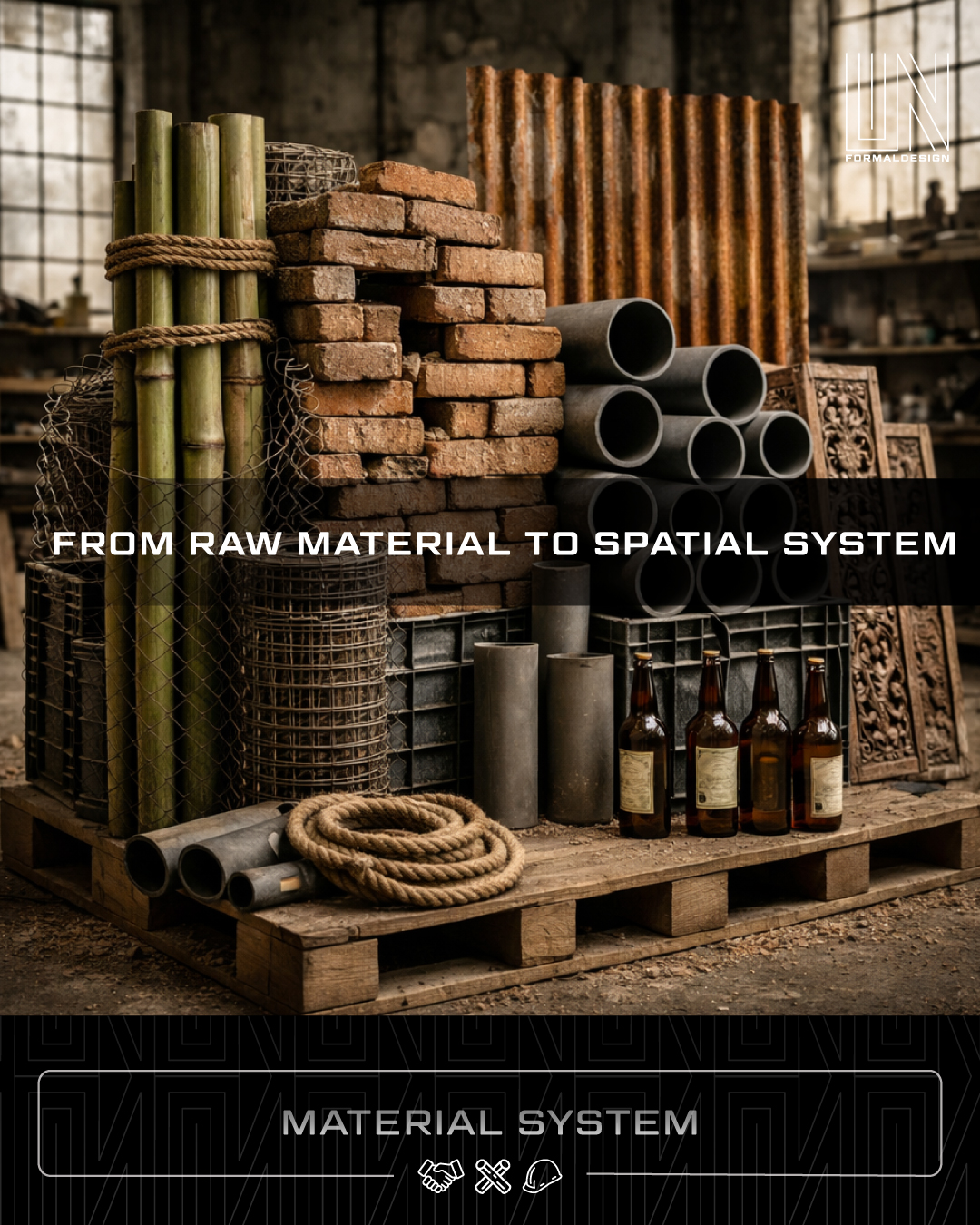
At Unformal Design, exposed concrete block walls are preferred over polished plaster in many F&B environments because they gain visual depth over time rather than losing it. Reclaimed timber reads warmer as it dries and darkens. Industrial steel mesh develops a tonal shift that reinforces an aged, lived-in aesthetic — the target in most of the studio’s hospitality projects.
How Materials Communicate Before Anyone Speaks
A guest reads a room before they sit down. The material palette — the roughness or smoothness of surfaces, the light absorption of a ceiling, the reflectivity of a bar counter — creates an emotional expectation before a menu is opened or a word of service is exchanged.
This is the logic behind the Unformal Design approach: the finish is the conclusion of a longer process. Mood, ageing, experience — that is what material actually controls.
In practice, this means:
- Raw surfaces signal honesty and confidence — no effort to hide the construction behind decorative overlay
- High-texture materials absorb sound and create intimacy, especially at lower light levels
- Reflective surfaces at bar fronts or counter edges create contrast against matte walls, drawing the eye toward the service point
- Industrial or reclaimed materials communicate permanence — the space was built to last, not to impress on opening night
Material Strategy in Unformal Design Projects
Across hospitality and F&B projects in Bangkok, Koh Samui, and Phuket, Unformal Design applies this material logic consistently:
OMBRA Bangkok — reclaimed timber walls paired with dark plaster. The combination reads casual at lunch and intimate at night without any change to the physical space. The timber improves as it dries; the plaster does not show service marks from a typical evening.
AILATI Bangkok — exposed structural brick paired with raw steel and warm-toned pendant lighting. The material palette signals craftsmanship and stability, appropriate for a wine bar concept that depends on perceived permanence and quality.
NOMADS Bangkok — bright lacquered panels and PVC modular elements. Materials chosen to be washable, replaceable, and high-energy — matching the operational reality of a high-traffic hostel environment.
Each choice is driven by the same question: what does this material need to do at 7pm, at midnight, and in three years?
What This Means for Your Hospitality Project in Thailand
For F&B and hospitality operators planning a fit-out in Thailand, material strategy should be addressed at brief stage — before concepts are presented and before any budgets are allocated to specific finishes.
The questions worth asking your design team upfront:
What is the atmospheric target at each time period — lunch, early evening, late night?
How long before the first major refurbishment is expected?
What maintenance team and budget is in place post-opening?
What does the material palette need to communicate to a first-time guest in the first ten seconds?
If these questions are not in the brief, they are unlikely to be in the design.
Contact Unformal Design at alessio@unformaldesign.com or via WhatsApp at +66 97 112 3561 to discuss material strategy for your next hospitality project in Thailand.
Frequently Asked Questions
What makes a material “strategic” in hospitality interior design?
A strategic material is chosen based on how it performs — how it ages, how it reads under different light conditions, and what it communicates to guests — rather than being selected for prestige or trend. Strategic material selection considers the full lifespan of a space, not just the opening night.
Why do expensive materials sometimes fail in restaurants and bars in Thailand?
Prestige materials are often selected for appearance at launch rather than performance under real service conditions. Marble stains and chips under F&B use; polished concrete shows wear quickly in high-traffic environments; some timber species warp in coastal humidity. The right material for a Thailand hospitality space handles heat, humidity, heavy cleaning, and high traffic over multiple years.
How does material choice affect the atmosphere in a restaurant or bar?
Materials determine acoustic absorption, light behaviour, and surface texture — all of which shape how guests experience a space emotionally. High-texture and dark-absorbing surfaces create intimacy; reflective surfaces increase energy; rough or industrial materials signal permanence. These atmospheric effects operate before any service or programming begins.
What does Unformal Design use as its starting point for material selection?
Unformal Design begins material selection with functional questions: how should the space feel at different times of day, how should it age over five-plus years, and what should it communicate before anyone speaks. Aesthetics follow from those answers rather than leading them.
How much does premature material failure cost in a hospitality fit-out?
According to fit-out contractors working in Bangkok and Phuket, premature surface replacement caused by poor material selection at design stage can represent 15–25% of the original fit-out budget within three years of opening. Early investment in material strategy costs less than remedial refurbishment.