



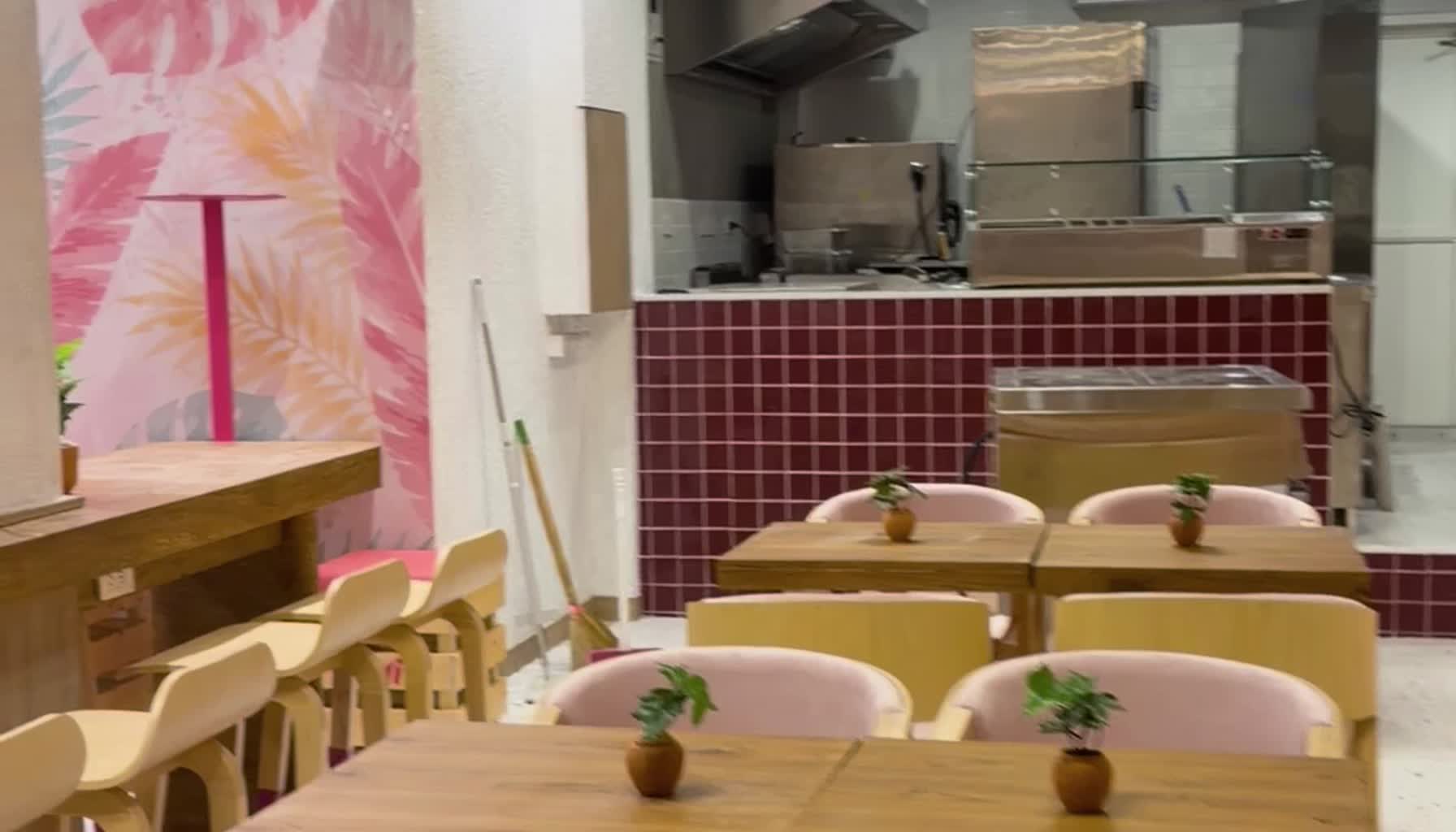
A punch list is the written list of everything that still has to be completed or corrected before a building or fit-out is handed over: a cracked tile, a light that flickers, a door that does not close, a finish that does not match the sample. In the United Kingdom the same document is called a snagging list. UNFORMALDESIGN is a Bangkok-based interior design and architecture studio, led by Italian architect Alessio Carta, that designs and follows the construction of cafés, restaurants, bars and hotels across Thailand. SATI, a tropical lifestyle café in Ao Nang, Krabi, is in exactly this stage now: the lights are on, the furniture is in and the last details are being closed. This article explains what a punch list is, what goes on it for a café, and why it matters under Thai law.
What is a punch list, and when is it written?
A punch list is written when the work is close enough to finished that the owner could open, but small items are still missing or wrong. The American Institute of Architects calls that point Substantial Completion; British contracts call it practical completion. The punch list is the bridge between that point and the final payment.
In the AIA A201-2017 general conditions, Section 9.8.1 defines Substantial Completion as the stage when the work is sufficiently complete for the owner to occupy or use it for its intended use. Section 9.8.2 then asks the contractor to prepare a comprehensive list of items to be completed or corrected before final payment, which the architect checks and adds to. AIA practice gives the contractor a fixed window to close the list, customarily 30 days, and the general conditions add a one-year period for correcting defective work after completion.
Thai fit-out contracts rarely follow AIA wording, but the logic is the same, and the terms travel: operators, contractors and designers in Thailand use “punch list” and “snagging” interchangeably.
| Term | Where it comes from | What it means |
|---|---|---|
| Punch list | United States, AIA contracts | The list of items to complete or correct before final payment |
| Snagging list, snag list | United Kingdom | The same list, named after “snags”, small defects |
| Substantial or practical completion | AIA (US) / UK contracts | The point when the space can be used for its purpose |
| Defects liability or correction period | Most contract families | The period after handover when the contractor must return to fix defects |
| Delivery and acceptance of the work | Thai Civil and Commercial Code, hire of work | The moment the owner takes the work over, with or without reservation |
Why does the punch list matter more in Thailand?
Under Thailand’s Civil and Commercial Code, a contractor is generally not liable for defects that the owner could see and accepted without reservation at delivery. Writing the punch list, and handing it over as a reservation, is how an owner keeps those defects the contractor’s problem.
Construction and fit-out contracts in Thailand are contracts for hire of work, governed by Sections 587 to 607 of the Civil and Commercial Code. Section 600, in its English translation, makes the contractor liable for defects that appear within one year after delivery, or within five years for a structure on land other than a wooden building, unless the contract sets a different period or the contractor concealed the defect. Commentators also point to a separate one-year deadline to bring a claim, counted from the day the defect appeared, which owners often miss.
The practical consequence is simple. If a café owner signs off the space on opening week without a written list of visible defects, the owner may have accepted them. A punch list attached to the handover, item by item, is the reservation. This article is a design studio’s practical reading, not legal advice: a Thai lawyer should check any contract before handover.
What goes on a café punch list?
A café punch list follows the room’s materials and systems, one by one. At SATI Ao Nang that means the terrazzo floor and counters, the pink plaster walls, the oak slats at the pick-up bar, the green wall with its neon sign, the banquettes, the open kitchen and the shopfront signage, each checked against the drawings and the approved samples.
The reel from site this week shows the communal tables standing on terrazzo with the open kitchen behind, the “sati” neon over pink banquettes on the green wall, the pick-up bar clad in oak slats, and the shopfront lit at night with its purple sign. Each of those elements has its own way of going wrong, and its own test.
| Element | What gets checked | How it is tested |
|---|---|---|
| Terrazzo floor and counters | Cracks, chips, uneven joints, sealing, stains | Walk the floor in raking light; water drop test on the sealer |
| Pink plaster walls | Hairline cracks, patchy colour, damage from furniture delivery | Compare against the approved sample panel in daylight and evening light |
| Oak slats at the bar | Alignment, gaps, finish, movement from humidity | String line and spacer check; inspect again after a week of air conditioning |
| Neon and lighting | Flicker, dead sections, dimming scenes, driver noise | Run every scene at full and lowest dim, at night |
| Banquettes and upholstery | Seams, stapling, stability, fabric matching the sample | Sit-test every seat; check fixings to the wall |
| Open kitchen interfaces | Extraction, drainage falls, sealant at counters, power points | Run the extraction at full load; pour water to check falls |
| Shopfront and signage | Sign brightness, timer, fixing, water at the threshold | Night inspection; hose test at the entrance during a dry day |
In a humid coastal town like Ao Nang, some items only show after the air conditioning has been running for days: timber that moves, plaster that cracks as it dries, condensation where cold air meets a warm wall. That is why a good punch list has two passes, one before opening and one a few weeks after.
How do you run the final stretch on site?
The final stretch runs in a fixed order: clean, inspect, list, assign, fix, re-inspect, accept. The inspection happens room by room with the drawings and the approved samples in hand, and every item gets a photo, a location, a responsible trade and a date.
1. Clean first. Dust hides scratches and cracks. Inspecting a dirty site produces a short list and expensive surprises later. 2. Walk with the drawings. Designer, contractor and owner walk together, so nobody argues later about what was agreed. 3. One item, one line. Photo, exact location, what is wrong, who fixes it, by when. 4. Separate what blocks opening from what does not. A broken extraction fan blocks service; a scuffed skirting board does not. 5. Re-inspect, then accept with the list attached. The list goes with the handover documents, not into someone’s phone.
At UNFORMALDESIGN this stage is part of construction follow-up, not an extra: the designer who chose the pink plaster and the oak is the person best placed to say whether what was built matches what was drawn. On a design-build project, where one team designs and builds, the punch list is also the team checking its own work, which is why the owner should still walk it.
What this article does not cover
This article does not cover licensing, food safety inspections or the operational pre-opening checklist, such as staff training and supplier set-up. It does not give legal advice on Thai construction contracts. SATI Ao Nang’s own punch list is not published here, so the table above shows what is checked on a room of this kind, not a record of defects found at SATI.
Working with UNFORMALDESIGN
For cafés, restaurants, bars and hotels in Bangkok, Krabi, Phuket, on Koh Samui and elsewhere in Thailand, UNFORMALDESIGN designs the space and follows the construction through to the punch list and handover. Contact alessio@unformaldesign.com or WhatsApp +66 97 112 3561.
Frequently Asked Questions
What is a punch list in construction? A punch list is the written list of work that still has to be completed or corrected before a fit-out is handed over and paid in full. It is drawn up when the space is usable but small defects remain, such as cracked finishes or faulty lights. In the United Kingdom it is called a snagging list.
What is the difference between a punch list and a snagging list? There is no practical difference. Punch list is the American term, used in AIA contracts, and snagging list or snag list is the British term, named after “snags”, small defects. Both list items to fix before handover. In Thailand, operators, designers and contractors use the two terms interchangeably on fit-out projects.
Who prepares the punch list? Under AIA A201-2017, the contractor prepares the list when the work is substantially complete, and the architect inspects and adds missing items. In practice, on a café or restaurant fit-out, the designer, the contractor and the owner should walk the space together with the drawings and approved samples, so every item has an agreed owner and date.
How long is a contractor liable for defects in Thailand? Under Section 600 of Thailand’s Civil and Commercial Code, a contractor is liable for defects that appear within one year after delivery, or five years for a structure on land other than a wooden building, unless the contract says otherwise. Visible defects accepted without reservation at delivery may not be claimable, so a written punch list matters.
When should a café do its snagging before opening? A café should do a first full snagging walk once the site is clean, the furniture is in and every system runs, usually one to two weeks before opening, then re-inspect before accepting the handover. A second pass a few weeks after opening catches items that only appear with use, humidity and air conditioning.
The takeaway
A punch list turns “almost finished” into a signed handover: every visible defect written down, assigned and fixed before the owner accepts the space. In Thailand it also protects the owner, because visible defects accepted without reservation can stay the owner’s problem. SATI in Ao Nang is at this stage now, and the finished space will follow when the doors open.
Internal links: /interior-design-ao-nang-krabi-sati/ (SATI Ao Nang interior design) · /construction-follow-up-interior-design-thailand/ (construction follow-up) · /design-build-vs-design-bid-build-hospitality/ (design-build vs design-bid-build) · /restaurant-interior-design-bangkok/ (restaurant interior design in Bangkok) · /interior-design-koh-samui/ (interior design on Koh Samui)