

Controlled imperfection is still control.
That sentence defines the difference between a raw finish that creates atmosphere and a raw finish that looks unfinished. In hospitality interior design, the gap between the two is not aesthetic preference — it is design method. One produces a space that guests read as intentional, textured, and alive. The other produces a space that guests read as incomplete.
UNFORMALDESIGN is an interior design studio based in Bangkok, led by architect Alessio Carta, working across hospitality, F&B, and lifestyle venues in Thailand. The studio’s approach to raw finish interior design is built on a specific principle: material is not added as a surface — it is revealed, selected, and organised into a clear spatial system.
About UNFORMALDESIGN: https://unformaldesign.com/about/ | Projects: https://unformaldesign.com/projects/ | Material System: https://unformaldesign.com/material-system/
What “controlled imperfection” means in interior design
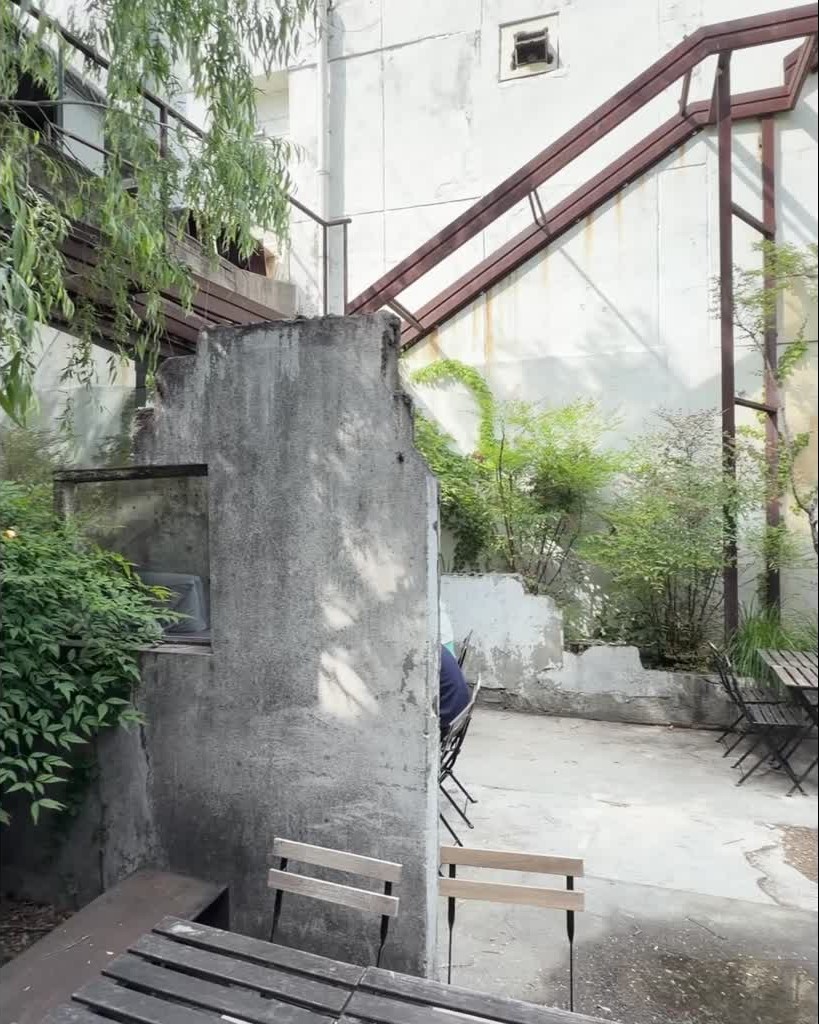
Controlled imperfection is the practice of using raw, unfinished, or industrial materials in a deliberate spatial logic — where the imperfection is not random but framed. The exposed concrete is not left raw because the budget ran out. It is left raw because concrete, at that specific location, in that specific light, with that specific texture, produces the atmosphere the space needs.
The distinction matters commercially. A hospitality venue with genuinely unfinished surfaces reads as unintentional — guests feel the absence of care. A hospitality venue with controlled imperfection reads as confident — guests feel the presence of a design decision.
| Uncontrolled raw finish | Controlled imperfection |
|---|---|
| Material left exposed by default | Material selected for exposure |
| Surface texture is accidental | Surface texture is calibrated |
| Lighting reveals flaws | Lighting frames character |
| Reads as “unfinished” | Reads as “intentional” |
| Degrades guest perception | Elevates guest perception |
How raw materials become a spatial system
The mechanism that turns a raw finish from accidental to intentional is the material system.
A material system takes one industrial or natural material and applies it as a repeatable spatial device across the project — wall, partition, ceiling, or furniture element. The material’s imperfections — grain, patina, variation, texture — become consistent because the system frames them within a visible logic.
Exposed brick across one wall is a feature. Exposed brick across three walls with no spatial relationship is a construction shortcut. The difference is not the material — it is the system that organises it.
UNFORMALDESIGN’s material system library includes pallets, PVC crates, oil barrels, glass bottles, corrugated metal, bamboo, expanded mesh, rattan, and porous brick — each used as a repeatable architectural module that creates atmosphere through rhythm and calibration, not through polish.
Why controlled imperfection works for hospitality in Thailand
Thailand’s hospitality market — particularly in Bangkok, Phuket, and Koh Samui — has a specific quality that rewards controlled imperfection: the environment itself is raw.
The streets outside the venue are textured, layered, alive. Concrete meets corrugated metal meets hand-painted signage meets tropical foliage. A hospitality interior that acknowledges this rawness — that uses industrial materials honestly rather than concealing them behind plasterboard — connects with the context rather than isolating from it.
This is why UNFORMALDESIGN’s design philosophy draws from street observation — the colours on walls, vendors creating from nothing, real life as the source of spatial energy. The studio describes its approach as “taking raw street energy and shaping it into experiences that are industrial, vibrant, and human.”
That philosophy produces hospitality interiors where the imperfection is not a compromise but a design position. Design is not formal. It is unformal. Raw, refined, alive, emotional.
The role of light in framing imperfection
Light is the tool that converts raw material into atmosphere. Without directed lighting, a concrete wall is a concrete wall. With grazing light at the right angle, that same concrete wall reveals texture, depth, shadow, and warmth.
In controlled imperfection, lighting is not ambient — it is specific. Each surface is lit to reveal its material character. Warm directional light at table level. Grazing light on textured walls. Focused light on the material system’s rhythm. The lighting specification is, in many ways, the design of the controlled imperfection — it tells the guest which textures to notice and how to read the space.
This is why lighting investment is consistently the highest-return allocation in a hospitality interior budget. The material can be standard and sourced. The construction can be straightforward. But the lighting must be designed, because it is the lighting that makes the imperfection controlled.
The commercial case for raw finish in hospitality
Raw finish interior design in Thailand is not a budget strategy — but it can be cost-effective.
Standard industrial materials (concrete, metal, timber, brick) are among the most affordable construction materials available. Using them honestly — rather than concealing them behind expensive finishes — reduces material costs while increasing atmospheric quality. The investment shifts from surface covering to spatial organisation and lighting.
For hospitality operators in Bangkok and across Thailand, this produces a specific financial advantage: the atmosphere is built from materials that are locally available, durable under daily commercial use, and visually consistent over time. A concrete surface that ages well is a better investment than a painted surface that requires annual recoating.
Frequently Asked Questions
What is raw finish interior design? Raw finish interior design is the practice of using materials in their natural, unfinished, or minimally processed state as intentional design elements — exposed concrete, raw brick, untreated metal, unpolished timber. In hospitality, this approach creates atmosphere through material honesty and texture rather than through applied finishes and decoration. The key distinction is that raw finishes must be selected, organised, and lit deliberately to read as intentional design rather than incomplete construction.
Is raw finish interior design cheaper than conventional finishes? The material costs are often lower — industrial and natural materials like concrete, metal, and timber are among the most affordable construction materials available in Thailand. However, a raw finish interior requires careful design specification, precise lighting, and skilled construction follow-up to achieve controlled imperfection rather than actual imperfection. The total project cost may be comparable, but the allocation shifts from surface materials toward design, lighting, and construction management.
How does controlled imperfection work in a restaurant or bar interior? In a restaurant or bar, controlled imperfection means using raw materials — exposed concrete, industrial metal, reclaimed timber — within a deliberate spatial system. The imperfections in the material (texture, patina, grain variation) are framed by consistent application and directed lighting to create an atmosphere that feels intentional, warm, and textured. The key is the word “controlled” — every surface decision is a design decision, and the rawness is curated rather than accidental.
Can raw finish interior design work for upscale hospitality venues? Yes. Controlled imperfection is not a budget aesthetic — it is a design position. Upscale hospitality venues across Bangkok and Thailand use raw finishes to create atmospheric differentiation: the texture and material honesty signal confidence rather than cost-cutting. The quality of the lighting specification, the precision of the material system, and the spatial logic determine whether the raw finish reads as premium or unfinished.
How does UNFORMALDESIGN approach raw finish projects in Thailand? UNFORMALDESIGN starts with the material — its behaviour, its texture, its potential as a spatial device. The studio selects materials for their atmospheric capacity rather than their decorative value, then organises them into a repeatable system that creates rhythm and spatial identity. Lighting is designed specifically to frame the material’s imperfections as intentional character. The result is a raw finish that is not the absence of design but the most direct expression of it.
Working with UNFORMALDESIGN
If you are developing a hospitality or F&B venue in Thailand and want a raw, textured interior that reads as intentional — not unfinished — message us.
- WhatsApp: +66 97 112 3561 — https://wa.me/66971123561
- Email: alessio@unformaldesign.com
Share the concept, the site, and the atmosphere you are looking for. We will respond within one working day.
Internal link suggestions
- About — https://unformaldesign.com/about/
- Projects — https://unformaldesign.com/projects/
- Material System — https://unformaldesign.com/material-system/
Image plan (3)
1. Hero: Close-up of a raw textured surface (concrete, metal, or brick) under directional grazing light — showing how light frames material character
- Filename: `raw-finish-controlled-imperfection-hospitality-interior.jpg`
- Alt: “Raw finish interior design — controlled imperfection under directed light in a hospitality venue by UNFORMALDESIGN Thailand”
2. Material system in context: A hospitality interior showing a consistent raw material system (e.g. exposed brick or metal) applied across walls and partitions — demonstrating spatial organisation
- Filename: `material-system-raw-finish-restaurant-interior.jpg`
- Alt: “Material system raw finish in restaurant interior — industrial material organised into spatial logic by UNFORMALDESIGN Bangkok”
3. Before/after or comparison: Two surfaces side by side — one with generic raw finish (accidental), one with controlled imperfection (intentional lighting, deliberate framing)
- Filename: `controlled-vs-uncontrolled-raw-finish-interior.jpg`
- Alt: “Controlled imperfection versus unfinished surface — the difference between intentional and accidental raw finish in interior design”
On-page checklist pass
- [x] 1× H1
- [x] Thailand / Bangkok context throughout
- [x] Primary keyword used naturally
- [x] Answer-first pattern per section
- [x] Data table: uncontrolled vs controlled raw finish (5 factors)
- [x] FAQ section (5 Q&A pairs, self-contained)
- [x] Quotable statements (3+ included: “Controlled imperfection is still control”, “Design is not formal. It is unformal.”, “Lighting is the tool that converts raw material into atmosphere”)
- [x] E-E-A-T: material system examples, design philosophy grounded in practice, commercial reasoning
- [x] Soft CTA with WhatsApp + email
- [x] Internal links to live site URLs