


Interior design and fit-out costs on Koh Samui start from the same base range published for Bangkok — roughly ฿10,000 per square metre for a good-standard finish, rising to ฿15,000–20,000 per square metre for high specification — with island logistics (freight, import lead time, contractor mobilisation) typically pushing the total above the mainland figure rather than below it. UNFORMALDESIGN, the Bangkok-based studio led by architect Alessio Carta, has delivered hospitality projects on Koh Samui including Fria Nikkei and Silque, and quotes every island project individually rather than against a fixed multiplier.
Here is what actually drives that number up or down on an island build.
How much does interior design cost on Koh Samui?
Start from the Thailand mainland benchmark: published cost guides put a full restaurant or hospitality fit-out at approximately ฿10,000 per square metre for a good finish, and ฿15,000–20,000 per square metre for a high-specification build, with interior design fees commonly quoted at ฿500–2,000 per square metre on top. Koh Samui projects sit at or above that range — everything shipped to the island carries freight and handling that a Bangkok site never touches.
| Cost component | Mainland (Bangkok) benchmark | Koh Samui adjustment |
|---|---|---|
| Fit-out, good standard | ~฿10,000 / sqm | Same base, plus freight/import on materials |
| Fit-out, high specification | ฿15,000–20,000 / sqm | Same base, plus freight/import on materials |
| Design fees | ฿500–2,000 / sqm | Comparable — design work isn’t shipped |
| Materials sourced off-island | Standard supplier price | Add barge/ferry freight + lead time |
| Contractor mobilisation | Local crews, no travel cost | Travel, lodging, and site logistics for crews and specialists |
There is no published fixed “island premium” percentage, and UNFORMALDESIGN does not quote one — the honest answer is that logistics cost depends on how much of the specification has to travel to get there, which is exactly why island projects get quoted individually.
What actually makes an island build cost more
The single biggest driver is not distance — it’s what has to be shipped versus what’s available locally. A build using locally sourced materials (stone, timber, some finishes) barely feels the island effect. A build specifying imported tile, custom fixtures, or fabricated elements pays for every one of those items to travel by barge or ferry, plus the lead time that comes with it.
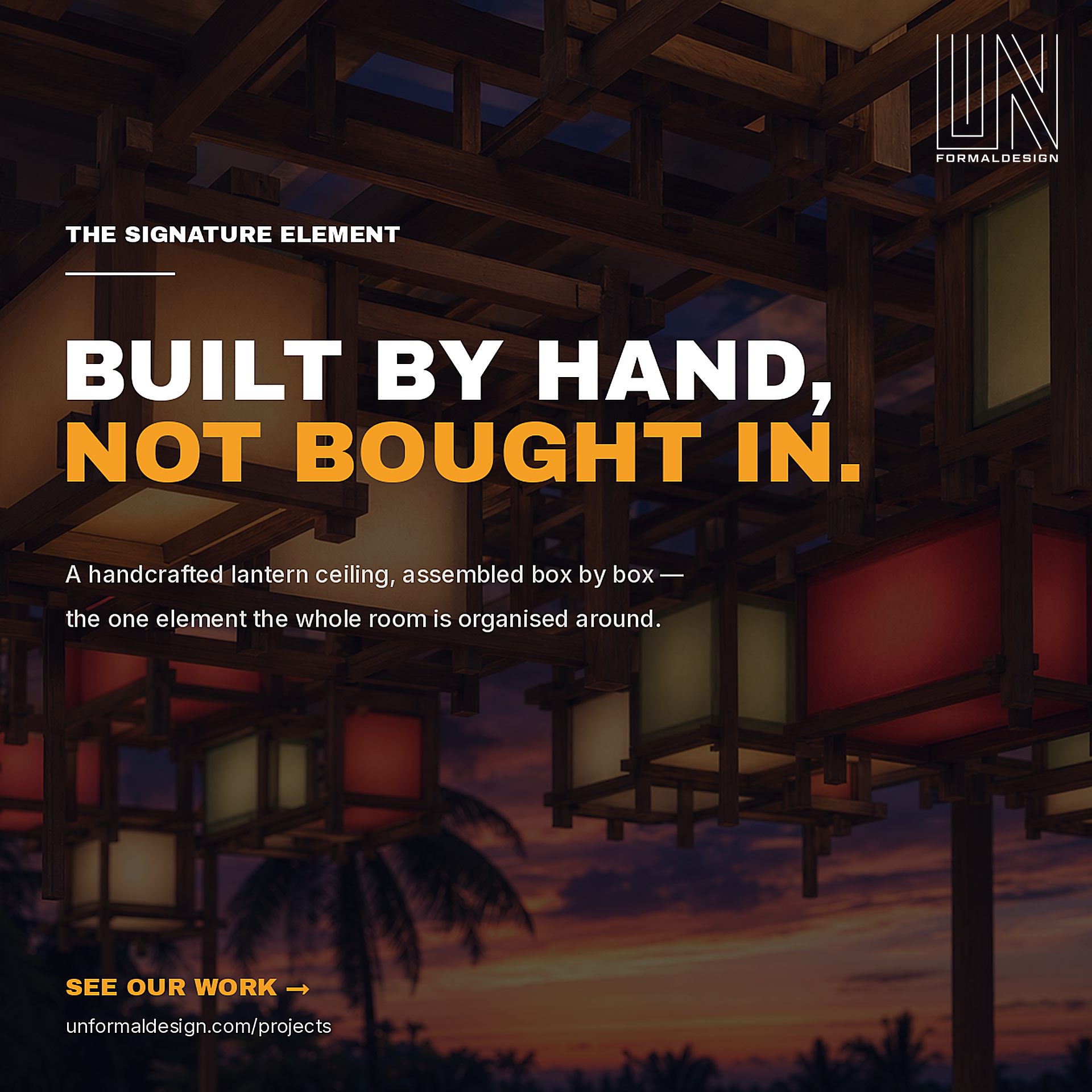
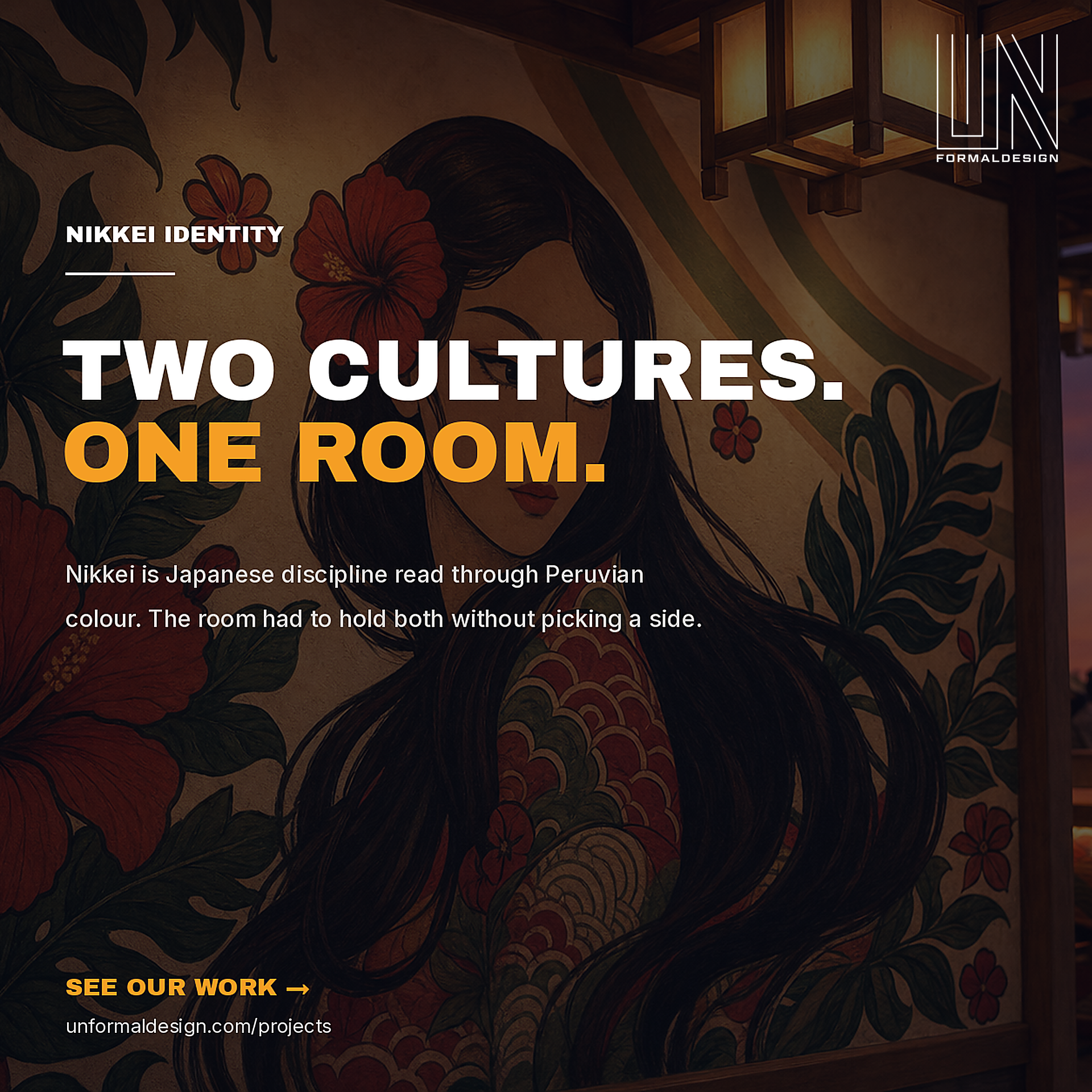
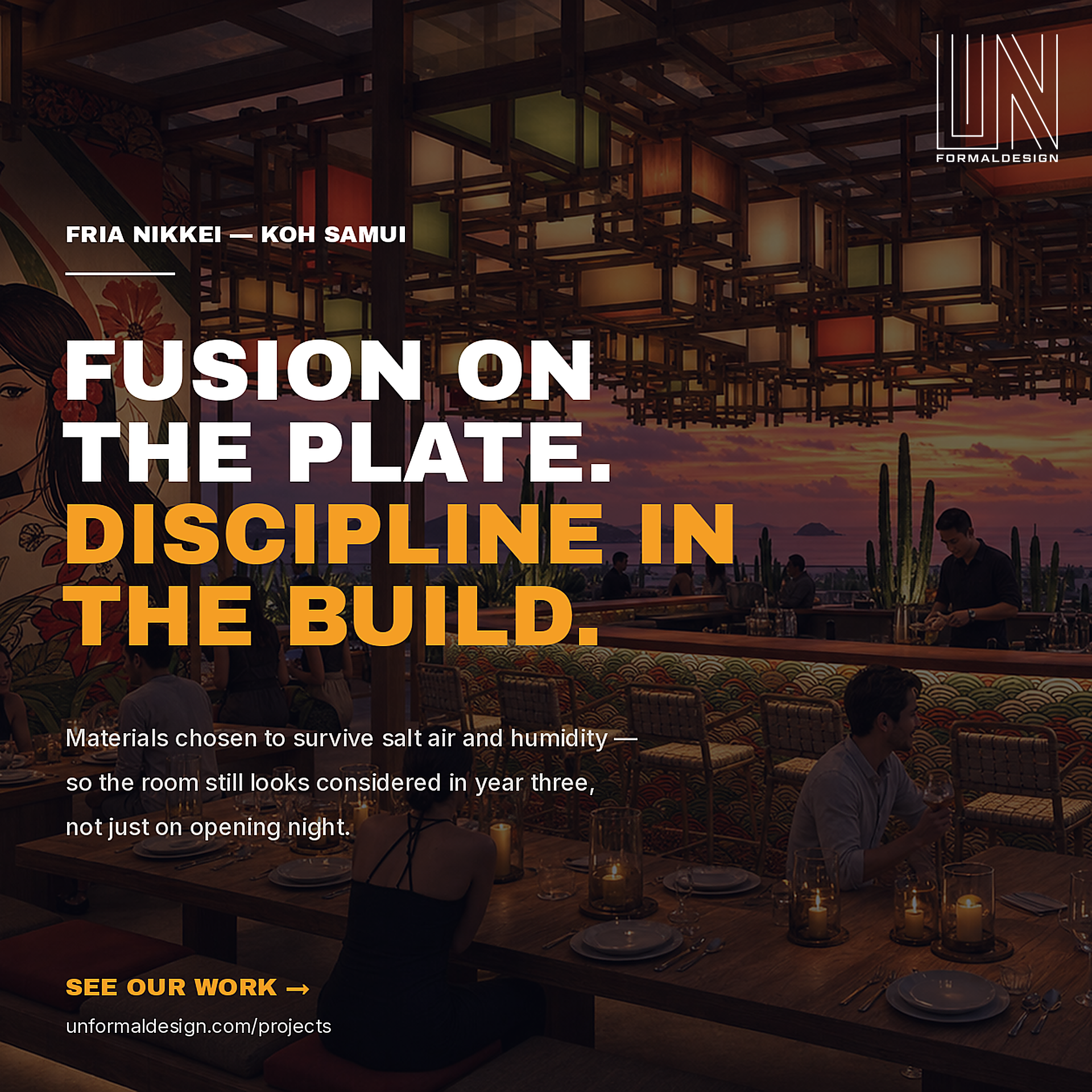
Durability is the second driver, and it’s a cost decision as much as a design one. Fria Nikkei, UNFORMALDESIGN’s Nikkei restaurant on Koh Samui, was specified with materials chosen to survive salt air and humidity without a constant repair cycle — so the room still looks considered in year three, not just on opening night. Specifying for salt-air durability up front costs more at fit-out than a mainland-grade finish would, but it removes a repair-and-replace cycle that would otherwise repeat every year or two on an island site.
Timeline: what changes when the site is an island
The phase structure is the same as a mainland project — pre-construction planning, design and drawings, then on-site build — but the on-site build phase is the one that stretches. Contractor mobilisation, materials freight, and weather windows for barge deliveries all sit outside the studio’s control and need to be built into the programme from day one rather than discovered mid-build.
Two real Koh Samui projects, two different scales
| Project | Type | What it shows about island cost |
|---|---|---|
| Fria Nikkei | Nikkei restaurant interior | Salt-air-durable material specification, dining-focused fit-out |
| Silque | Luxe nightclub interior | Larger-scale immersive build — textures, mirrors, suspended features, higher fabrication content |
Both projects sit on the same island and answer to the same logistics reality, but Silque’s scale and fabrication-heavy brief sit at a different cost tier than Fria Nikkei’s dining-room build — proof that “Koh Samui cost” is really a function of scope, not just location.
Getting a real number for your project
Published ranges are a starting point, not a quote. UNFORMALDESIGN prices Koh Samui projects after reviewing the shell, the specification, and how much of the material list has to travel to get there — the same discipline behind the studio’s interior design work across Koh Samui.
Frequently Asked Questions
How much does interior design cost on Koh Samui compared to Bangkok? Koh Samui projects start from the same base range as Bangkok — roughly ฿10,000–20,000 per square metre depending on specification — with island freight and contractor mobilisation typically adding to the total rather than reducing it.
Why is building on Koh Samui more expensive than on the mainland? Mainly logistics: materials that aren’t sourced locally have to travel by barge or ferry, and contractors and specialists need travel and lodging factored into the programme. Locally sourced materials feel the island effect far less.
Does UNFORMALDESIGN charge a fixed premium for island projects? No. There is no published fixed island multiplier — cost depends on how much of the specification has to be shipped in. UNFORMALDESIGN quotes each Koh Samui project individually after reviewing the brief.
What Koh Samui projects has UNFORMALDESIGN completed? Fria Nikkei, a Nikkei restaurant designed with salt-air-durable materials, and Silque, a large-scale immersive nightclub interior — two different scales that show how scope, not just location, drives the final number.
Does building on an island take longer than on the mainland? The design phases are the same length, but the on-site build phase typically stretches due to materials freight, contractor mobilisation, and weather windows for barge deliveries — all worth building into the programme early.