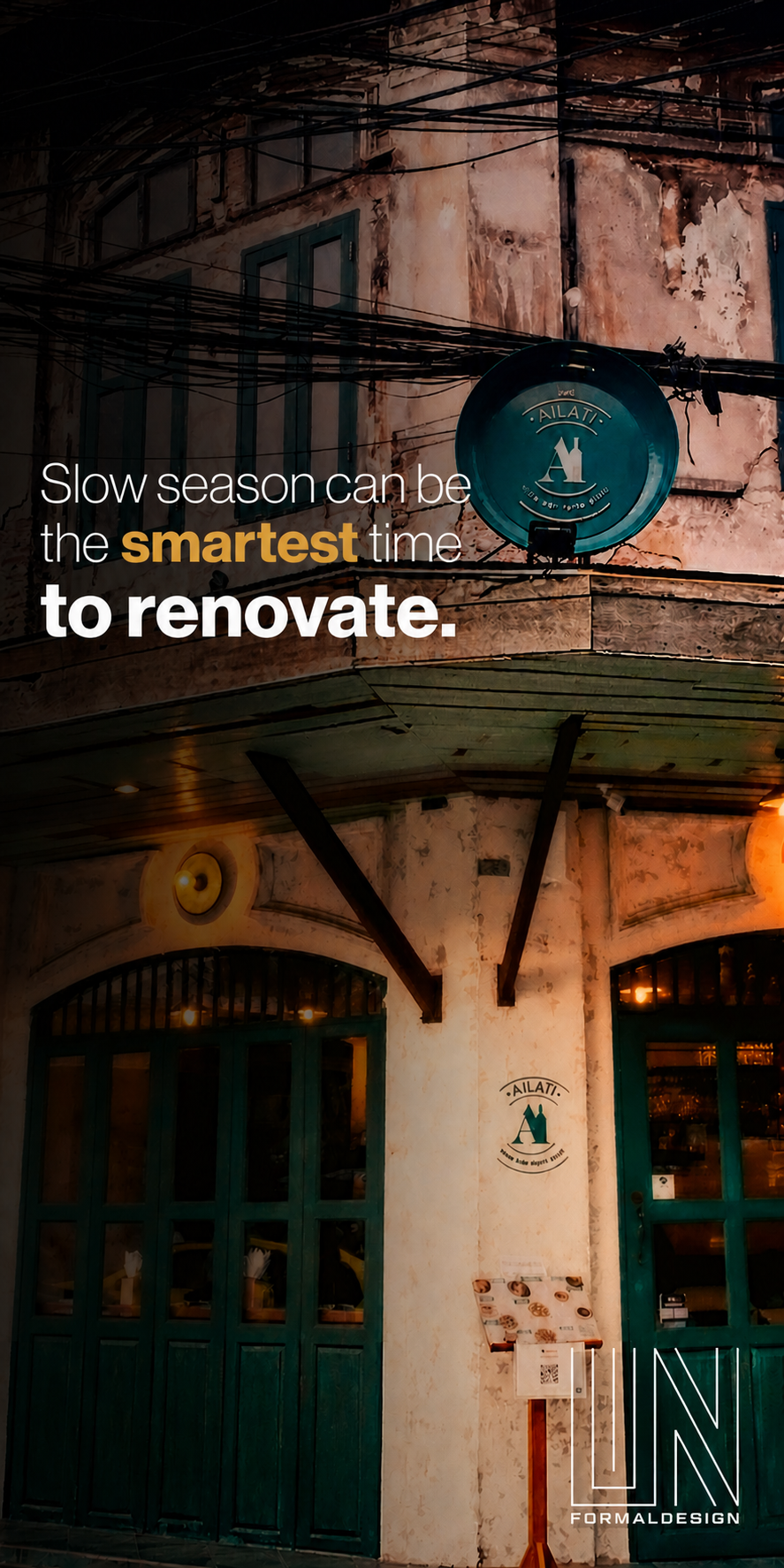



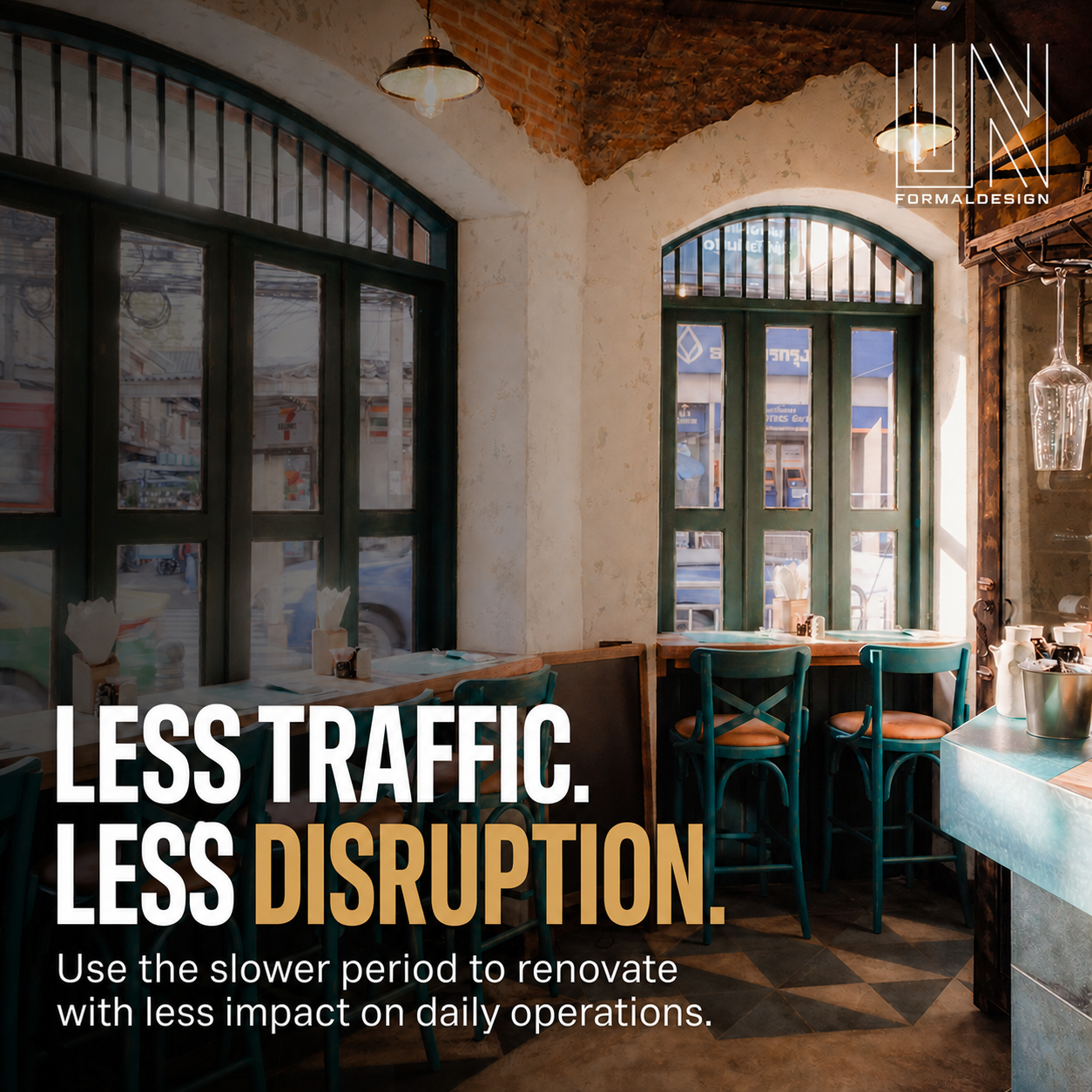
Most hospitality operators in Bangkok treat the rainy season as a slump to get through: fewer covers, quieter rooms, a stretch to survive until high season brings the crowds back. UNFORMALDESIGN, the Bangkok-based studio led by Italian architect Alessio Carta, treats it differently: the rainy season is the best window on the calendar to build.
Best time to renovate a restaurant in Bangkok isn’t a trick question with a seasonal answer everyone assumes. It’s usually the exact month operators are trying hardest to avoid.
Why operators avoid renovating during the rainy season, and why that’s the wrong call
The instinct is understandable: fewer guests already means tighter margins, and closing for a renovation on top of that feels like doubling the pain. But that instinct measures the wrong cost. A renovation started in high season either forces a business to stay open around the construction, which slows the build, complicates logistics and gives guests a worse experience, or forces a closure during the exact weeks the business earns the most. Low season removes both problems at once.
What actually changes on-site during the slow months
Fewer covers doesn’t just mean fewer sales to protect. It changes how the build itself runs.
| Factor | High-season renovation | Low-season renovation |
|---|---|---|
| Foot traffic around the site | Contractors work around active guests and deliveries | Site access stays clear, less disruption to daily operations |
| Compromise on scope | Partial closures, phased work to stay operational | Full access to the space, no phasing needed |
| Opening timing | Risks bleeding into peak demand | Lands the reopening right as demand returns |
None of these are visible on a construction timeline drawn up in a spreadsheet. They only show up in how fast a site actually moves once contractors are on the ground.
The real advantage: opening into the audience you built for
Planning the renovation during the slower months means the refreshed space is ready to welcome guests right as high season begins, instead of opening mid-way through the year’s biggest demand window. A concept finished in October or November opens straight into Bangkok’s tourist and dining season, instead of debuting into a quiet month and having to wait for momentum to build.
Take Buzz Cove, an F&B concept our studio designed in Bangkok. The interior pulls the street’s energy in rather than shutting it out: raw textures, open sightlines, materials chosen to age with the city instead of resisting it. A space built to feed off its neighbourhood earns its momentum from the people around it, and it deserves to open when that neighbourhood is at full volume, not in the quietest week of the year. That is what the calendar decision protects.
Designing for the calendar, not against it
UNFORMALDESIGN plans construction timelines around this logic on every hospitality and F&B project, treating the slow season as the design window rather than a constraint to work around. It changes what’s realistic to attempt in a renovation, and it changes when a business should be planning to start one.
Considering a renovation timed for a high-season opening? Reach the studio at alessio@unformaldesign.com or +66 97 112 3561.
Frequently Asked Questions
Is rainy season really the best time to renovate a restaurant in Bangkok? For most F&B and hospitality operators, yes. Lower foot traffic can mean less disruption to daily operations and a smaller commercial impact during the build, and a reopening timed for high season means the refreshed space is ready right as demand returns.
Doesn’t closing during rainy season still mean lost revenue? Rainy season already carries the lowest covers of the year, so the revenue given up is smaller than closing during a high-demand month, and the business reopens in time to capture the season it actually needs.
Can a renovation stay open partway through construction instead of closing? It can, but staying open during high season usually means phased work, restricted areas and a worse guest experience throughout the build. Closing during the slow season, with full site access, is almost always faster.
How long does a typical F&B renovation take? It depends on scope, but timing a renovation to start in the rainy season and finish before high season is a planning target UNFORMALDESIGN sets explicitly for hospitality and F&B clients in Thailand.
Does UNFORMALDESIGN handle the construction timeline, or only the design? UNFORMALDESIGN works from concept through construction follow-up, including timing recommendations like this one, so the design and the build schedule are planned together rather than handed off separately.