



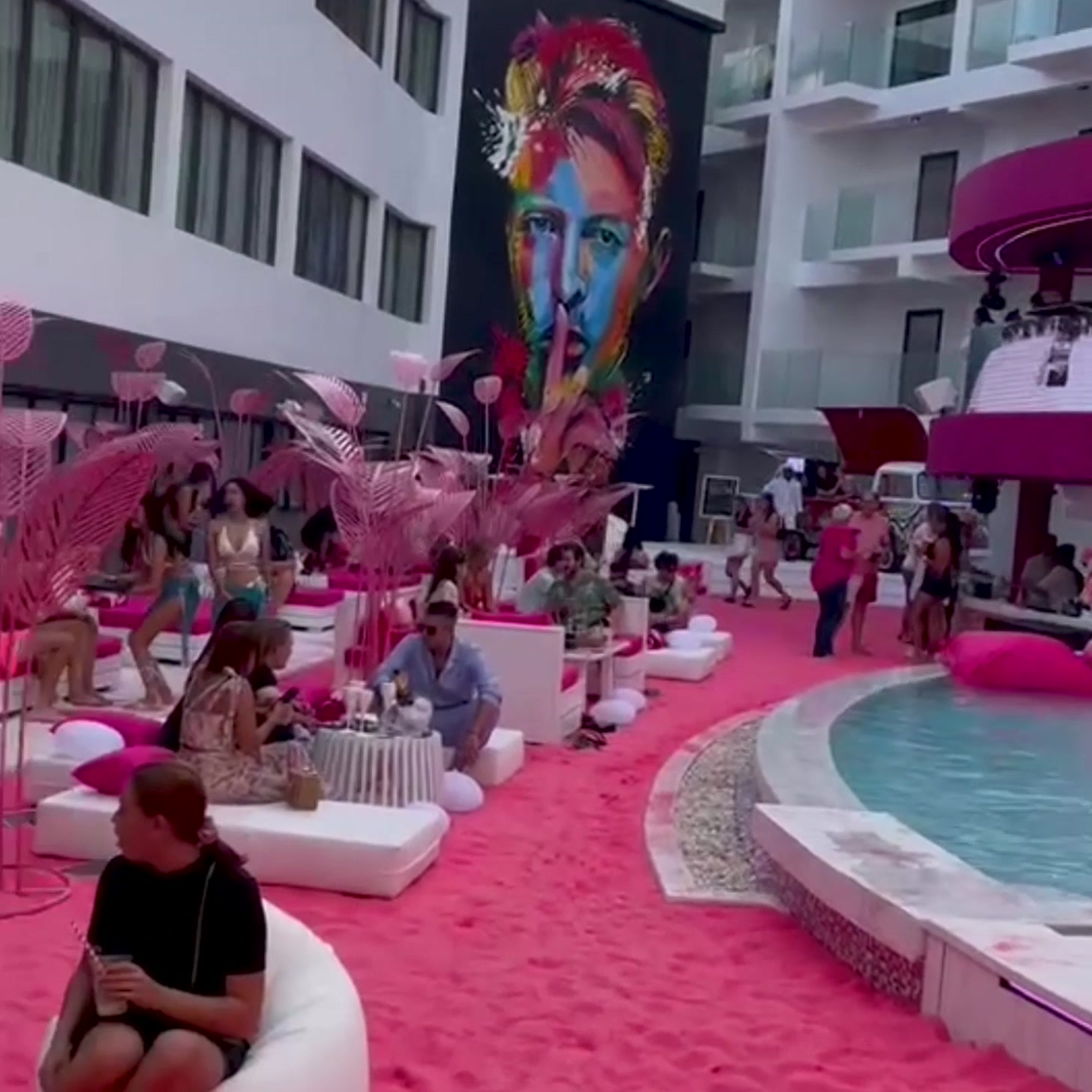
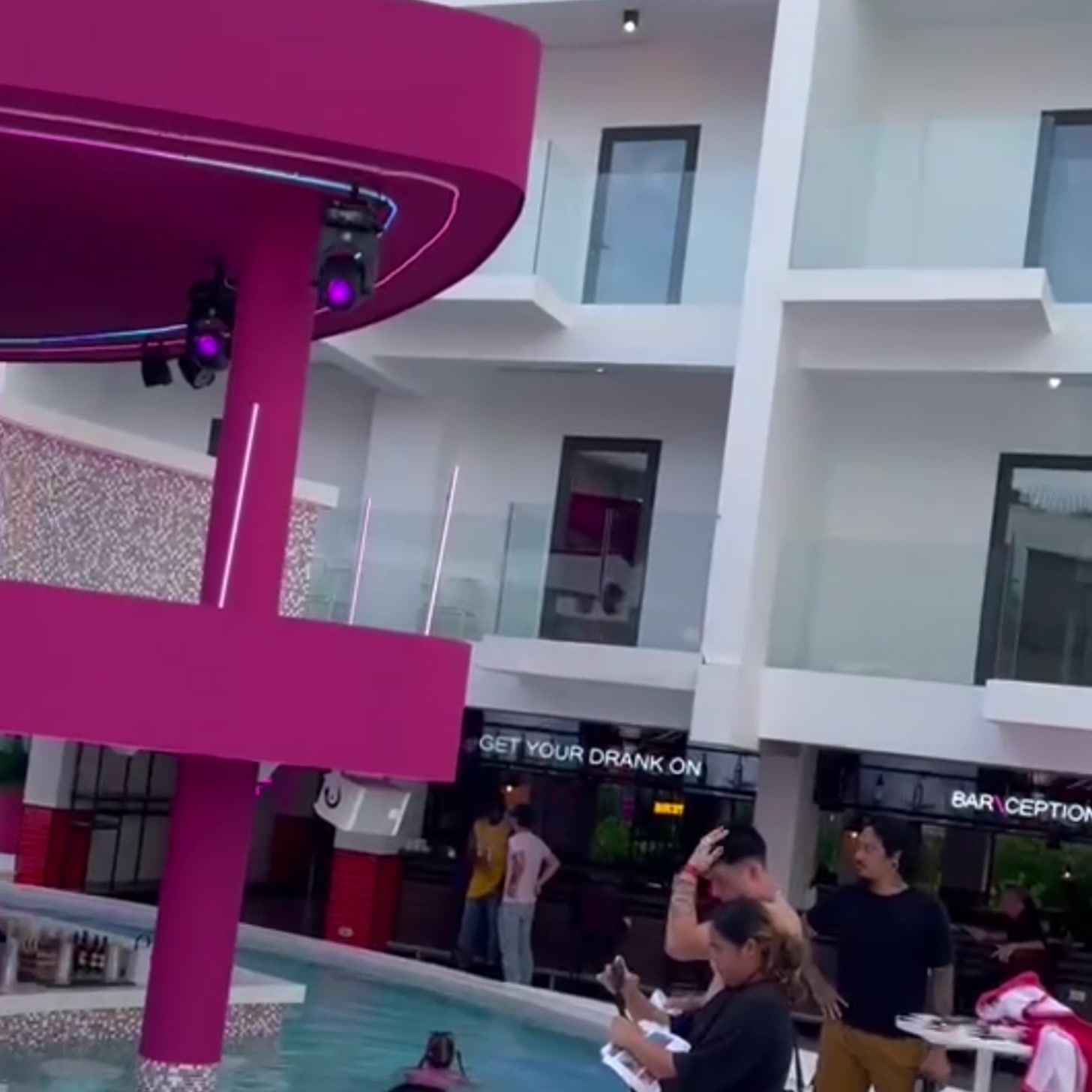
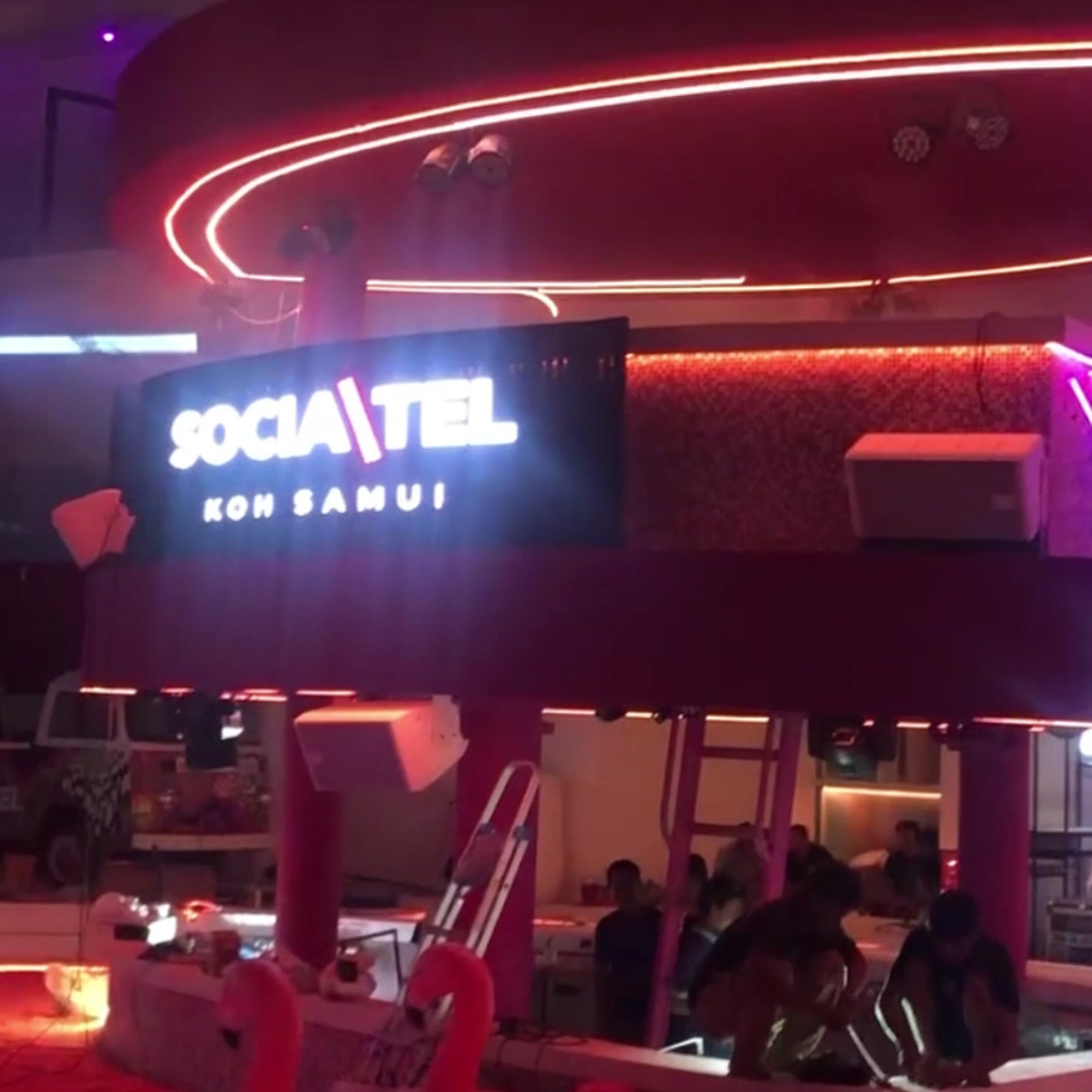
Beach club design in Koh Samui is system design, not styling. The most valuable hospitality venues on the island do not run one business — they run two, in the same footprint, at different times of day. A luxury daytime pool retreat and a nightlife destination are not two aesthetics applied to one room; they are two operating modes that the architecture has to support. At Socialtel in Koh Samui — a 10,000-square-metre pink-sand venue designed by Unformal Design — the entire space was engineered to perform at two different frequencies. If a space only works at one time of day, it is leaving half its revenue on the table.
Two Businesses, One Footprint
By day, Socialtel operates as a luxury pool and beach retreat: bright, open, calibrated for relaxation, long lunches, and sun. By night, the same square metres become a nightlife icon — higher energy, intimate, atmospheric. Most venues choose one of these and accept that the building sits half-idle for the other half of the day.
Designing for both is a revenue decision before it is a creative one. A beach club that only earns from 11am to 6pm has fixed costs running 24 hours and income running seven. The brief at Socialtel was the opposite: every zone had to justify itself in two completely different business contexts.
> Day and night are not aesthetics. They are two different business modes — and the materials, lighting, and acoustics have to switch with them.
What Actually Has to Change Between Modes
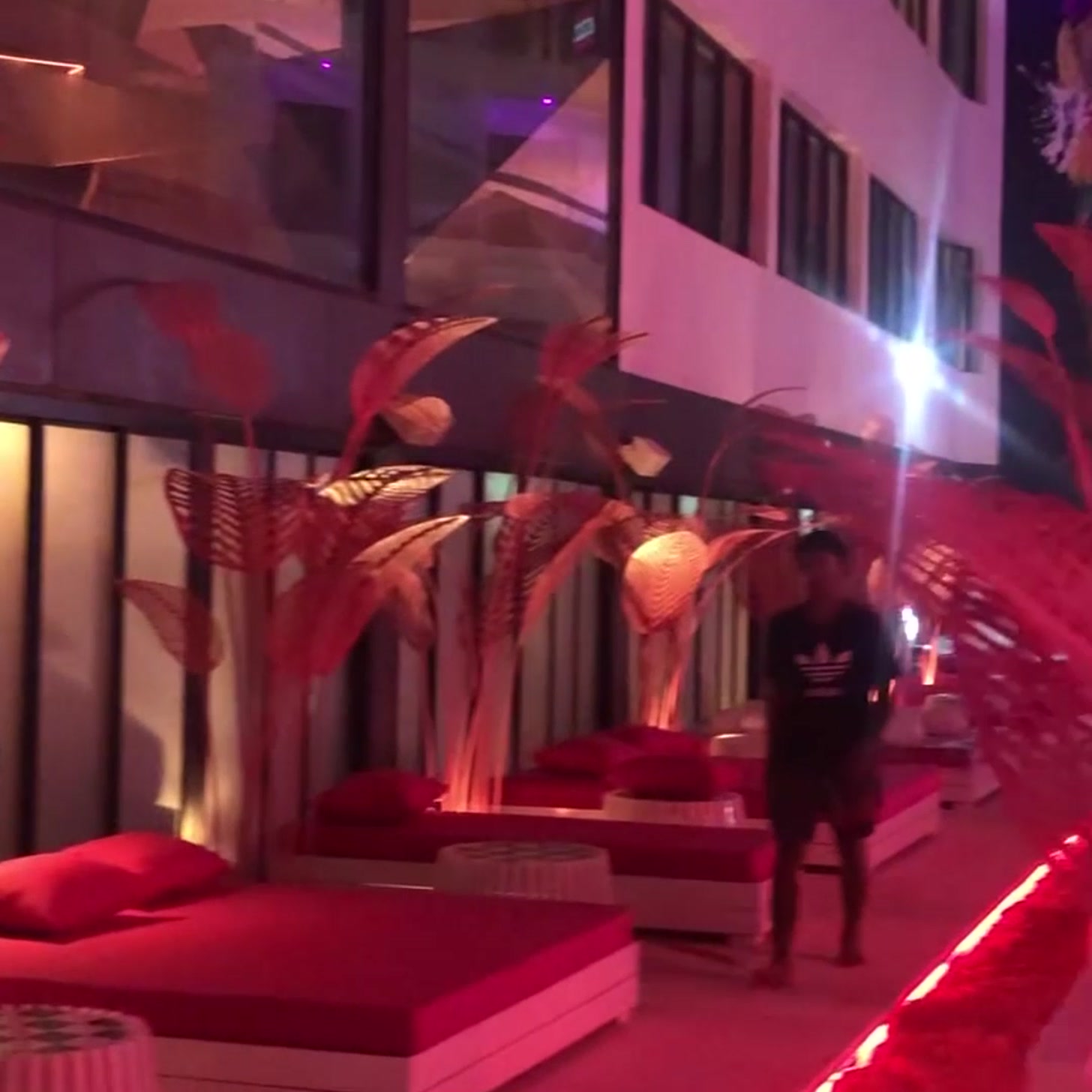
Transforming a space from a daytime retreat to a nightlife venue is not done with a playlist. It is built into the physical fabric — decisions made at design stage that cannot be retrofitted later.
| System | Day mode | Night mode |
|---|---|---|
| Lighting | Natural light, soft shade, open sightlines | Layered artificial light, controlled pools of focus, atmosphere |
| Acoustics | Open, relaxed, conversation-scaled | Zoned for energy without bleeding sound across the whole venue |
| Materials | Surfaces that read calm and luxurious under sun | The same surfaces shifting tone and depth under low light |
| Spatial zoning | Generous, open flow toward pool and beach | Defined social zones that create intimacy and movement |
The hardest part is that these are the same surfaces. A material is chosen not for how it looks at one moment but for how it reads across the full daily cycle — luminous and clean at midday, deeper and more intimate after dark. That dual performance is the difference between a space that is decorated and one that is designed as a system.
Why Acoustic and Lighting Zones Are the Real Investment
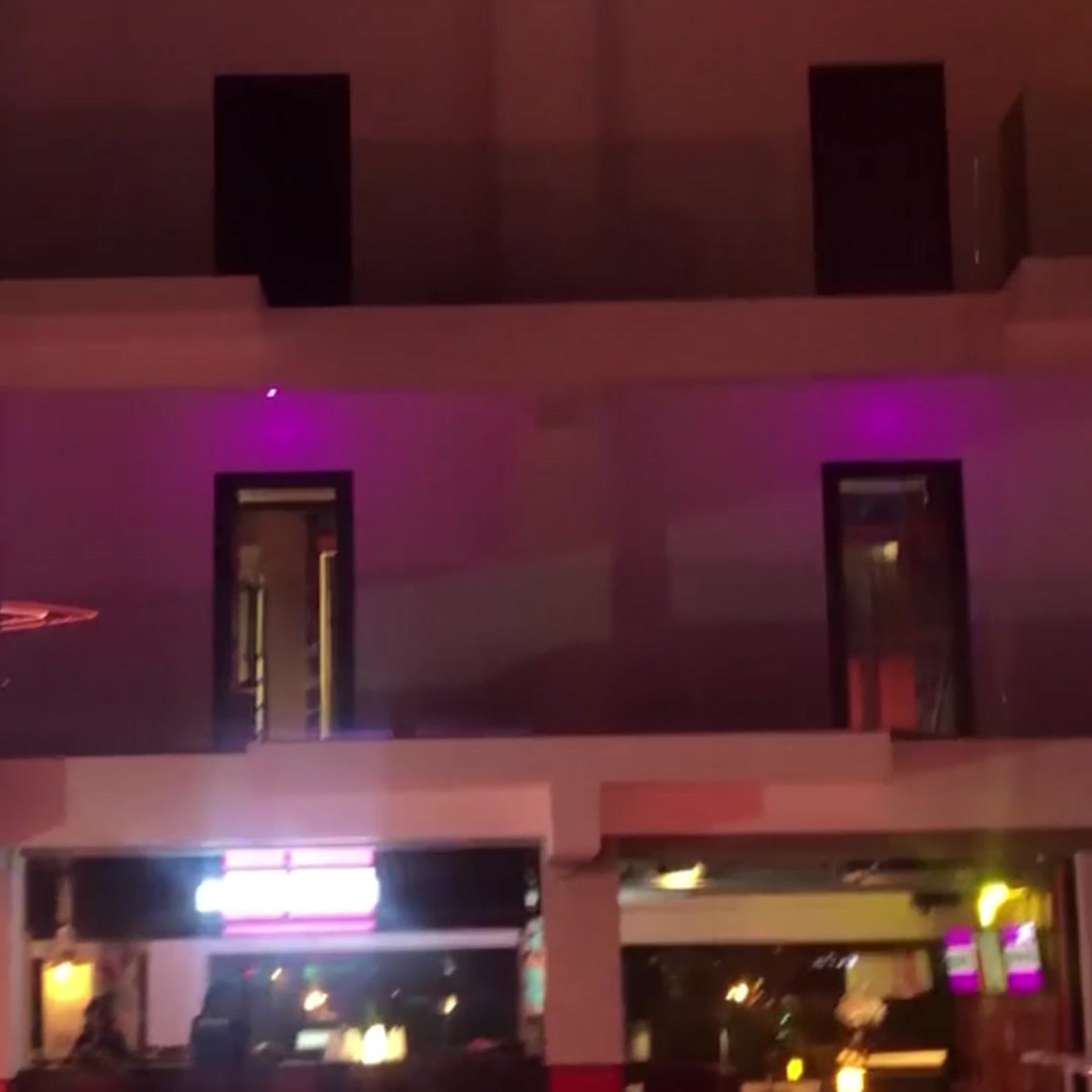
In a 10,000sqm venue running two business models, the invisible systems matter more than the finishes. Acoustic zoning lets one part of the venue hold a high-energy crowd while another stays conversational — without that separation, a night venue is either too quiet to feel alive or too loud to operate. Lighting zones let the same footprint feel expansive at noon and intimate at midnight.
These are not decorative layers added at the end. They are structural decisions that determine whether the night economy of the venue is viable at all. For hospitality developers and resort operators in Thailand and Southeast Asia, this is where beach club design either creates a second revenue stream or quietly forfeits it.
Frequently Asked Questions
What makes a beach club design successful in Koh Samui? A venue that performs in more than one business mode. The strongest beach clubs operate as daytime retreats and nighttime destinations from the same footprint, with lighting, acoustics, and materials designed to switch between the two — not a single look that only works for part of the day.
Can the same space really work as both a day and night venue? Yes, if the dual function is designed in from the start. At Socialtel’s 10,000sqm site, lighting layers, acoustic zoning, and material choices were specified to read one way under sun and another after dark. Retrofitting this into a single-mode space later is far more expensive than designing for it upfront.
Why is acoustic zoning important in hospitality design? In a large venue, acoustic zoning allows different areas to operate at different energy levels simultaneously — a lively social zone and a calmer one — without sound bleeding across the whole space. It is what makes the night economy of a large venue actually function.
Who designs beach clubs and resorts in Thailand? Unformal Design, led by architect Alessio Carta, designs hospitality and F&B venues across Thailand and Asia — including Socialtel in Koh Samui — with a system-led approach focused on how a space performs commercially, not only how it looks.
Design for Both Frequencies
A hospitality space that only works at one time of day is a half-used asset. The day-night system described here is one half of the Socialtel story — the venue was also a full brand and spatial rebrand, where visual identity and interior were developed as one direction. If you are developing a resort, beach club, or large hospitality venue in Thailand, the question to ask at concept stage is simple: does this space earn at every hour the lights are on? Explore the full Socialtel project and Unformal Design’s hospitality work at unformaldesign.com/projects, or talk to the studio: alessio@unformaldesign.com / +66 97 112 3561.