

One of the easiest ways to weaken a hospitality project is to split it into too many separate conversations.
Branding says one thing. Interior design says another. Construction follow-up becomes reactive. Turnkey gets treated like logistics. Everyone is technically involved, but the space slowly loses its centre.
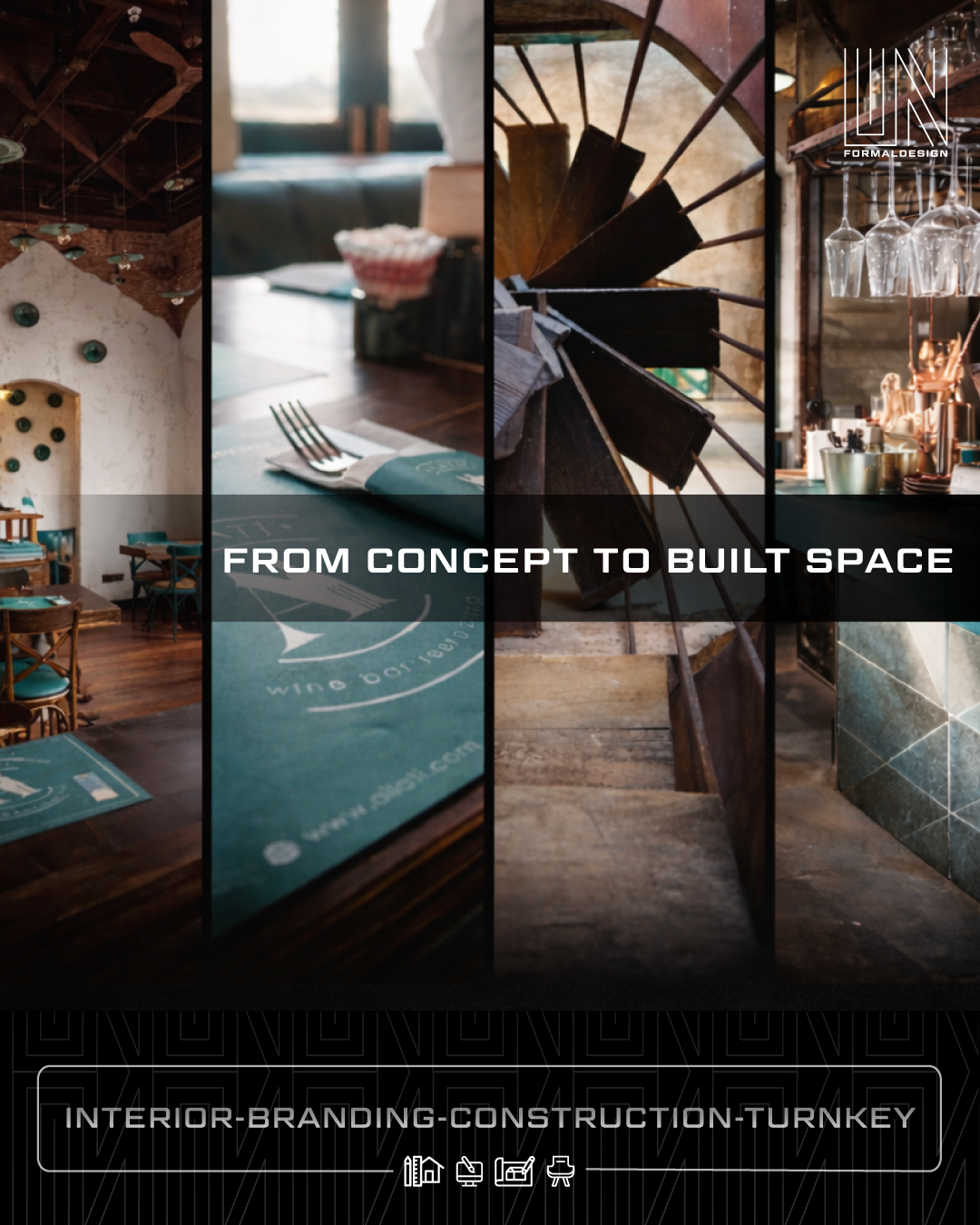
UNFORMALDESIGN sees those pieces differently. Interior, branding, construction follow-up, and turnkey are not separate ideas. They are different phases of one direction.
About UNFORMALDESIGN: https://unformaldesign.com/about/ | Projects: https://unformaldesign.com/projects/ | Material System: https://unformaldesign.com/material-system/
That matters because turnkey interior solutions only become valuable when they protect the same atmosphere all the way through.
What “one direction” actually means
It means the room keeps answering the same core questions at every stage:
\- what should people feel when they enter?
\- what should the brand feel like in space, not just on paper?
\- which material choices carry that feeling best?
\- what needs to be protected once the project reaches site?
\- what compromises are acceptable, and which ones break the concept?
If the answers shift too much from phase to phase, the project may still finish, but it will not feel coherent.
Why projects drift
They drift when each service solves only its own task.
Branding starts focusing on graphics. Interior design focuses on layout and finishes. Construction follow-up focuses on problems. Turnkey focuses on delivery dates.
All of those are real concerns, but without one shared design logic the room starts becoming a stack of isolated decisions.
That is usually when the atmosphere gets diluted.
What stronger alignment looks like
- Branding and spatial identity reinforce each other instead of competing.
- Material and lighting choices translate the brand without becoming literal.
- Construction follow-up protects the emotional core of the room while solving practical issues.
- Turnkey support keeps the last mile aligned instead of treating it like admin.
That is how different phases stay connected without becoming repetitive.
What founders should really ask
Instead of asking only “what services do you offer?”, better questions are:
\- how do you keep the concept coherent across different project stages?
\- where does the brand show up physically in the room?
\- who protects the atmosphere when the site starts pushing back?
\- how do you stop turnkey from flattening the design into a delivery checklist?
Those answers reveal more than a services menu ever will.
Why this matters in Thailand
Hospitality projects in Thailand move through pressure fast: changing budgets, contractor suggestions, schedule compression, material substitutions, opening deadlines.
That environment rewards clarity. The stronger the direction, the easier it is to make quick decisions without losing identity.
That is the real advantage of treating the process as one system.
Working with UNFORMALDESIGN
If you’re planning a hospitality, bar, restaurant, retail, or lifestyle venue in Thailand and want branding, interior, construction follow-up, and turnkey support to stay aligned under one idea, message us.
\- WhatsApp: +66 97 112 3561 — https://wa.me/66971123561
\- Email: alessio@unformaldesign.com
Send the project type, stage, and whether the current challenge is concept clarity, design development, or execution alignment.