

A lot of wellness spaces make the same mistake: they try to signal calm with the obvious vocabulary.
Neutral colours. Soft music. A little stone. A little wood. Everything behaves correctly, and very little feels memorable.
Petra Wellness Centre avoids that by giving calm a stronger form. Instead of decorating the room with wellness cues, the project builds a physical journey shaped by carved surfaces, warm materiality, and one carefully placed moment of surprise.
UNFORMALDESIGN approached the space as wellness interior design that should feel grounding and immersive from the first step in—not clinical, not generic, and not overloaded with spa clichés.
About UNFORMALDESIGN: https://unformaldesign.com/about/ | Petra project: https://unformaldesign.com/projectes/petra-wellness-centre/ | Projects: https://unformaldesign.com/projects/
The design reference comes from Petra in Jordan, but the translation is spatial rather than literal. The room borrows the feeling of stone-carved movement—walls, floors, and ceilings shaped to guide the body forward with softness instead of spectacle.
What gives the project its atmosphere
The strongest move is the way texture and geometry work together.
Stone veneers and handcrafted liquid wallpaper bring a grounded softness that reads natural without becoming rustic. The sculpted forms gently pull the guest through the space, so the experience is felt as a sequence rather than a static room.
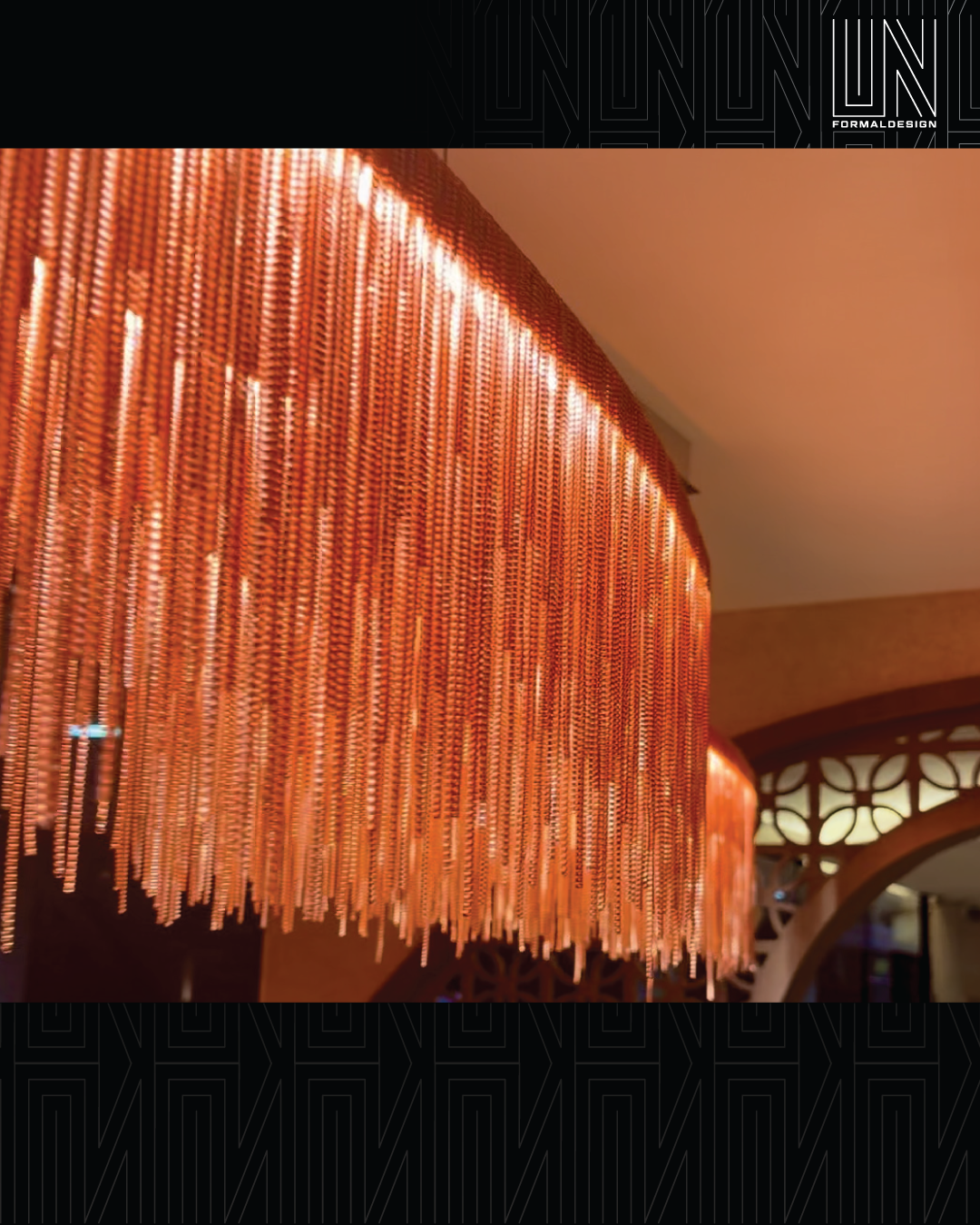
Then there is the waterfall feature.
That matters because wellness is often built through small shifts in tempo. The water element becomes an emotional pause, a short break in the journey that changes how the next space is perceived.
Why this feels more believable than “standard spa design”
The room does not rely on symbols of calm. It relies on actual spatial behaviour.
- The surfaces soften the pace of the body.
- The curves make movement feel guided rather than forced.
- The textures absorb light in a way that feels warm and quiet.
- The water feature introduces a moment of transition instead of decorative noise.
That makes the atmosphere feel earned.
What operators can learn from it
Wellness interior design is not only about looking serene. It has to manage expectation, movement, and sensory rhythm.
That means asking:
\- where does the guest first slow down?
\- what material should feel closest to the body?
\- how does light move across the surfaces during the day?
\- where should the room hold silence, and where should it offer release?
The answers matter more than whether the palette looks “spa-like” on Pinterest.
What needs to be protected in a project like this
\- the quality of the textured finishes, because cheap execution flattens the whole idea;
\- the relationship between curves and circulation, because sculpted forms still need to stay practical;
\- the way water, light, and acoustics interact, because one harsh note can break the mood;
\- the material transitions, because calm often lives in how smoothly one surface hands over to another.
When those parts are handled well, the project stops feeling themed and starts feeling atmospheric.
Working with UNFORMALDESIGN
If you’re planning a wellness, retail, or lifestyle space in Thailand and want it to feel immersive without falling into generic spa design, message us.
\- WhatsApp: +66 97 112 3561 — https://wa.me/66971123561
\- Email: alessio@unformaldesign.com
Send the venue type, city, and the kind of mood you want guests to feel first.