



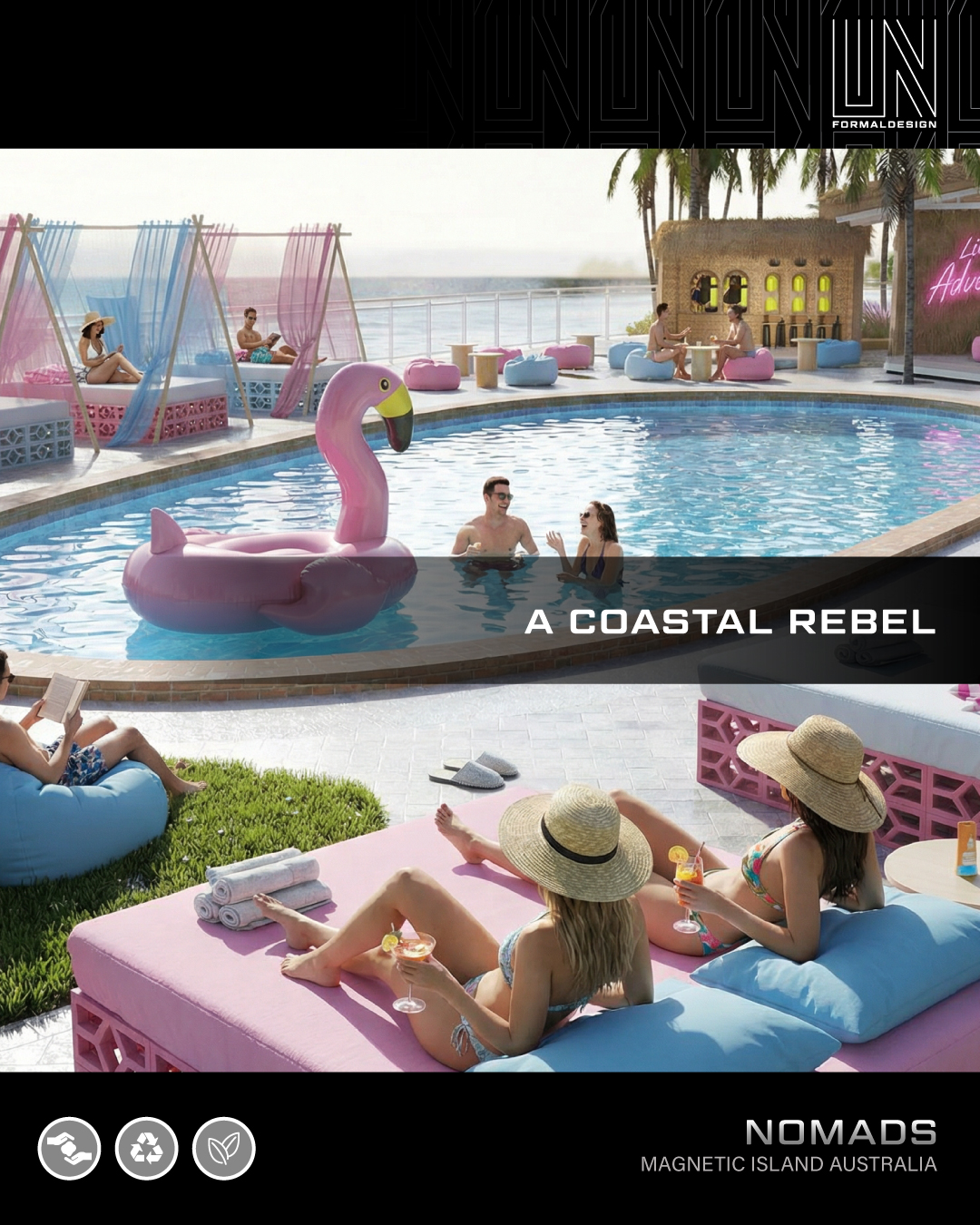
Coastal hospitality is a trap. Many projects try to “look like the beach” and end up generic. A better move is to translate the brand energy into the local rhythm—materials, light, and social behaviour.
5 Design Moves Thailand Coastal Operators Can Use
Build the Base Layer from Natural + Recycled Materials
The base should feel tactile and breathable: rattan and woven fibres, timber textures, natural rope, recycled objects that can take damage and be repaired.
Keep Brand Identity as “punctuation,” Not Wallpaper
Use a few controlled “brand moments”: neon sign, themed artwork, a colour pop at key nodes.
Design for Barefoot Circulation
Coastal guest flow is different: wet feet, towels, sand, constant in/out movement. Materials and junctions must be durable and forgiving.
Make Hangout Zones Feel Like a Sequence
Map: arrival → first drink → social core → quiet edges → exit.
Let the Interior Merge with the Context (don’t Compete)
If the beach is the hero, the interior supports it. Your job is to frame views, shade, and comfort—not to scream.
Atmosphere Workshop
• Book a 60-minute Atmosphere Workshop to lock the one-sentence feeling.
FAQ
Q: What is the one thing that makes a hospitality interior memorable?
A: A clear feeling, expressed through light, material, and movement.
Q: How do you design for Thailand conditions?
A: Durable materials, refined touchpoints, ventilation/maintenance access, and lighting that works at low lux.
Q: What do you need to quote a project?
A: Location, approximate area, venue type, scope, timeline, and constraints.