


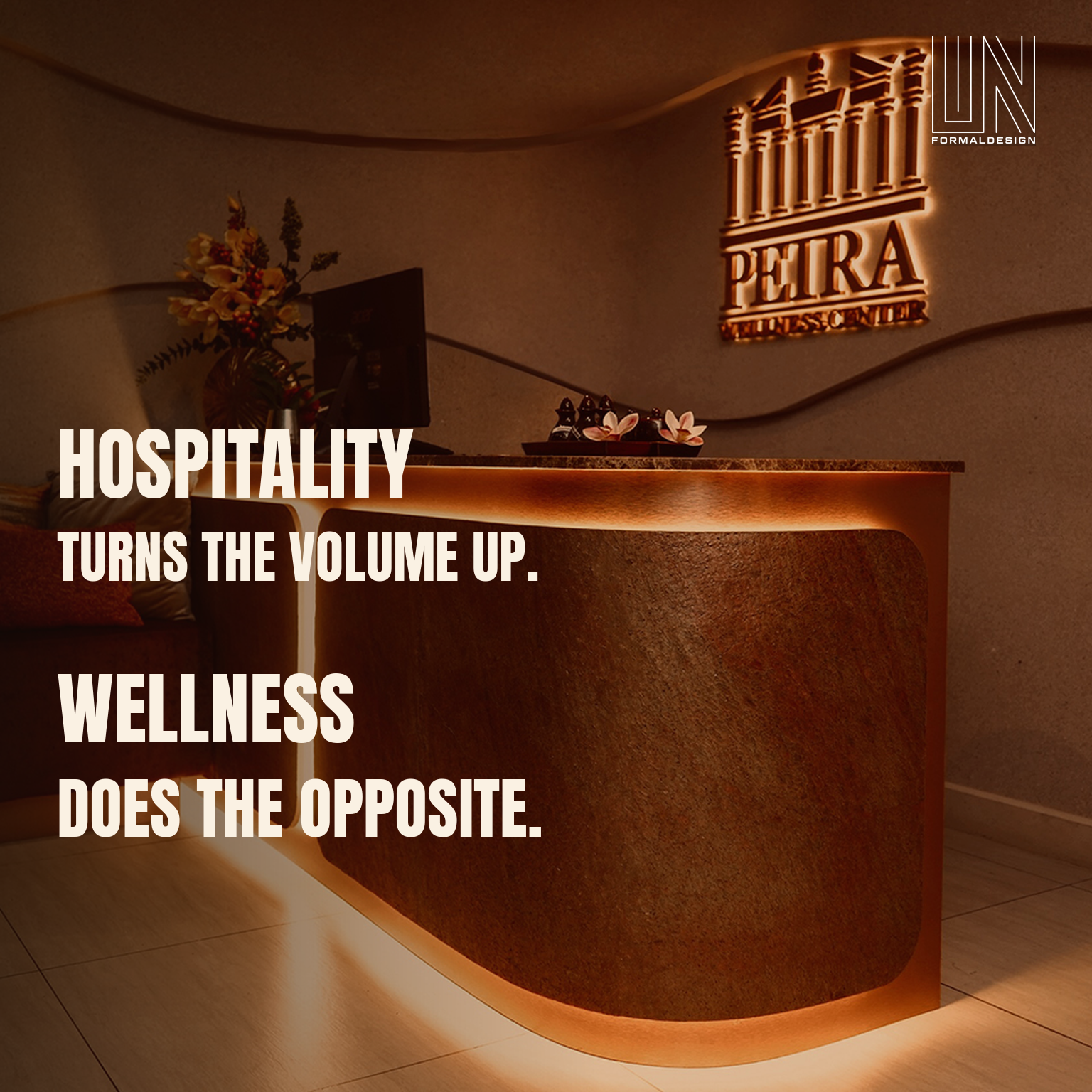
Spa interior design in Thailand runs on the opposite instinct to the rest of hospitality design. A bar or a restaurant is built to raise a guest’s energy within seconds of arrival. A spa is built to lower it: the light, the sound, the texture underfoot, even the speed at which somebody walks. UNFORMALDESIGN is a Bangkok interior design studio led by Italian architect Alessio Carta that designs hospitality, F&B, retail and wellness interiors across Southeast Asia, and treats a spa brief as a different problem to solve, not a dimmed version of a restaurant.
Here is the part most operators get wrong: a quiet room is harder to design than a loud one, and it is harder for a reason that has nothing to do with taste.
Why is a calm room harder to design than an energetic one?
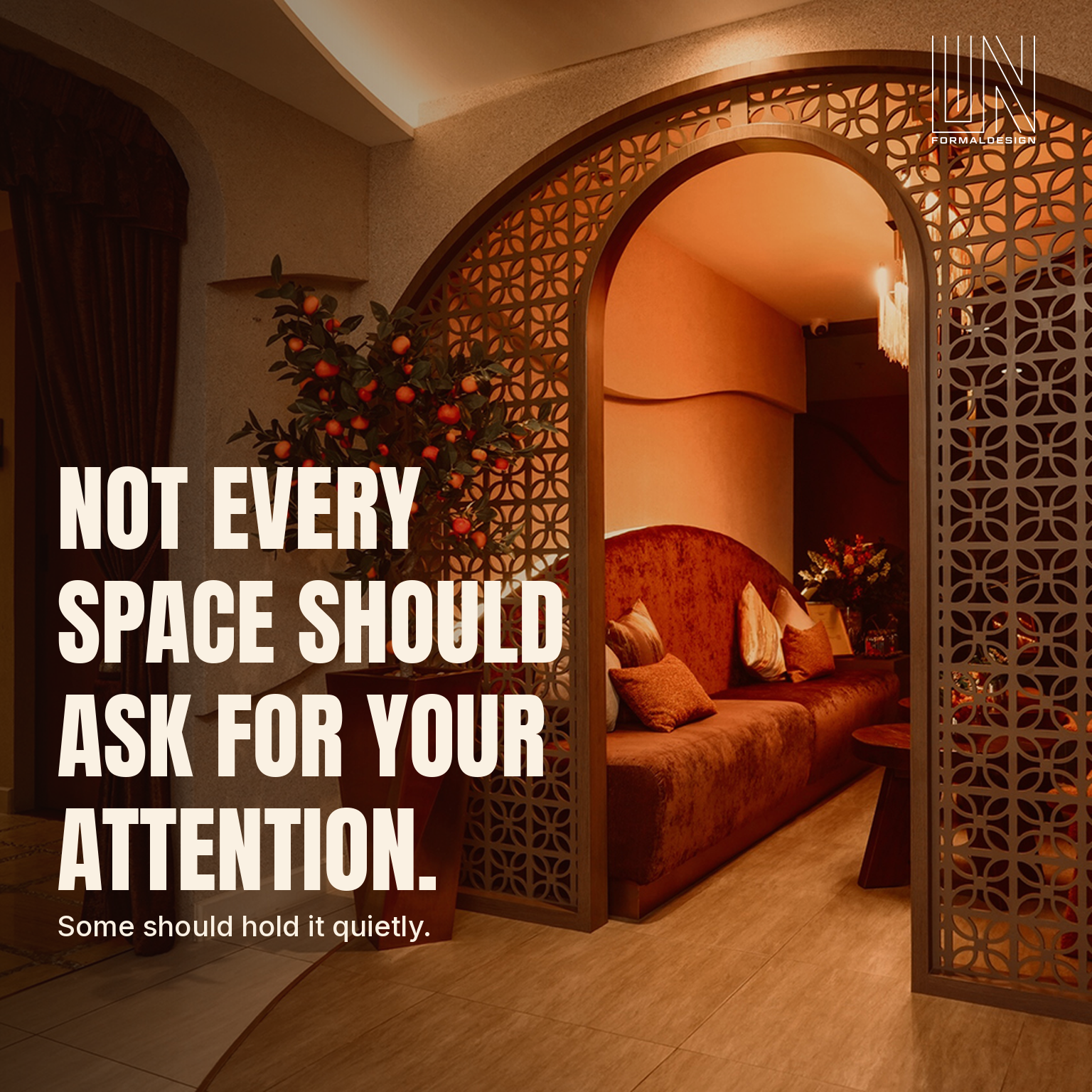
A quiet interior has nowhere to hide a weak decision. Removing elements from a room is easy; removing the right ones, in the right order, so the space still reads as deliberate rather than unfinished, is not. A busy hospitality interior can absorb two or three average choices inside a dense composition, because the eye never rests long enough to audit any single surface. A spa gives the eye nothing else to do. Every material, every light source, every sightline that survives the edit is doing visible work, and any of them can break the room on its own.
That is why stripped-back spas so often feel empty instead of serene. Nothing was designed. Things were simply left out.
What actually lowers the volume in a spa interior?
Four levers carry most of the result, and in a typical fit-out brief they rarely get equal attention.
| Lever | Hospitality default | Spa and wellness approach |
|---|---|---|
| Light | Bright and layered, built to energise | Soft and indirect, built to slow the eye |
| Sound | Music and ambient buzz | Controlled reverberation, deliberate quiet |
| Material texture | Contrast and statement finishes | Continuity, fewer materials, softer transitions |
| Circulation | Designed for flow and table turnover | Designed to slow walking pace |
The difficulty is not any single lever. It is moving all four together so none of them dominates. A room with beautiful lighting and a hard acoustic ceiling is not calm; it is a photograph of calm.
A worked example: PETRA Wellness Centre
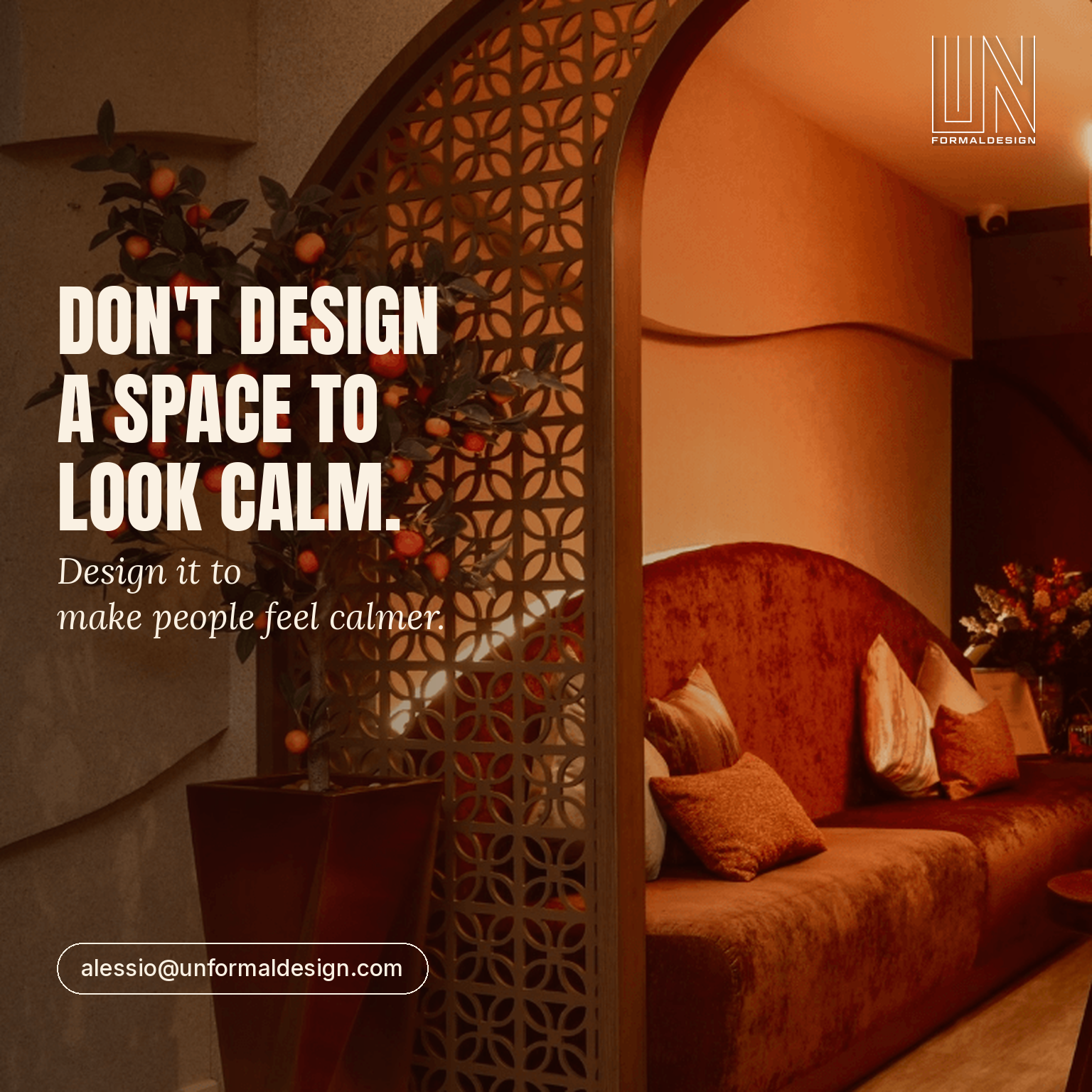
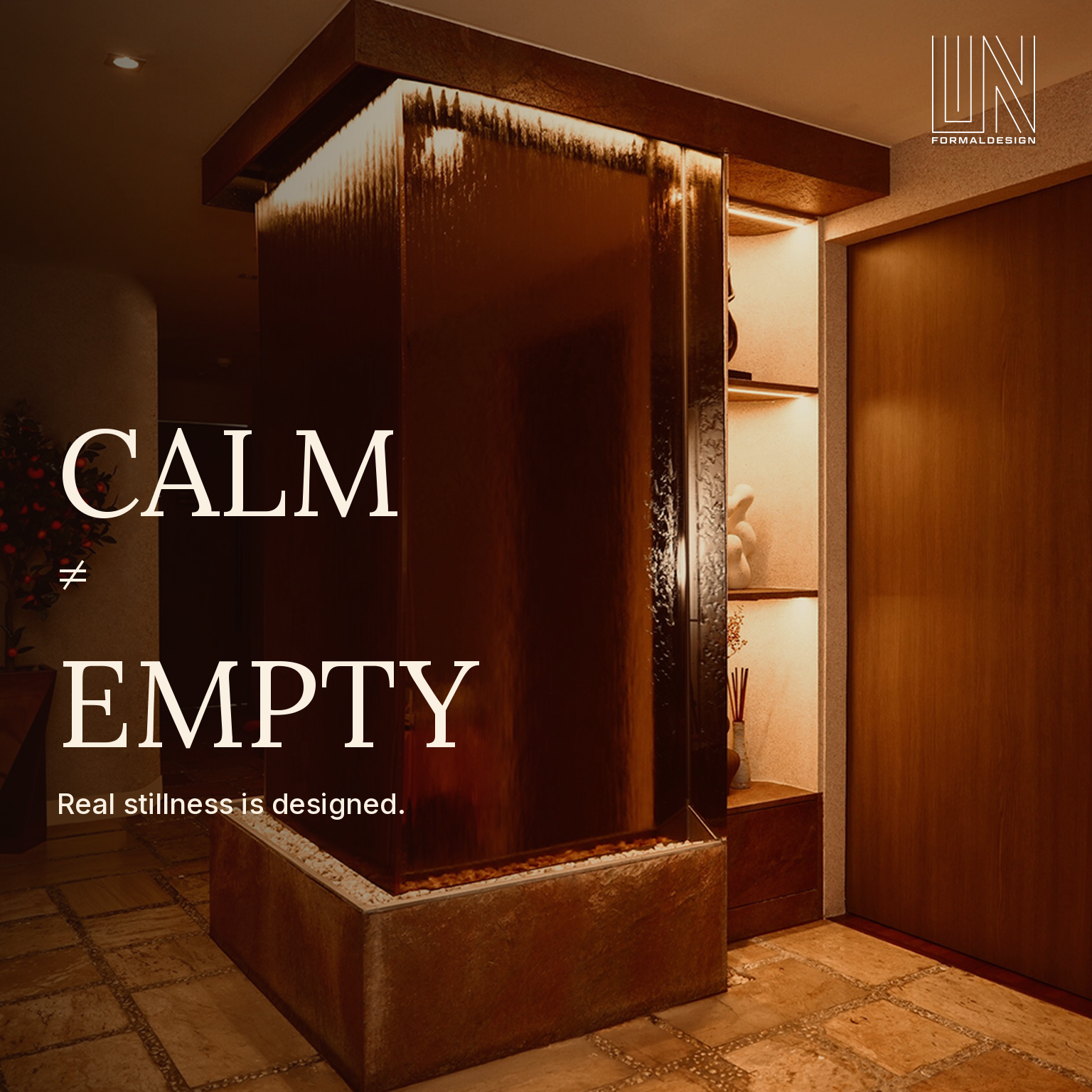
PETRA Wellness Centre is UNFORMALDESIGN’s wellness project built from a reference to the stone-carved city of Petra in Jordan, translated spatially rather than literally. Walls, floors and ceilings are shaped into sinuous carved forms that guide the body forward with softness instead of spectacle. The surfaces are stone veneer and handcrafted liquid wallpaper, which read as natural without tipping into rustic. Partway through the journey there is a waterfall feature, placed as an emotional pause rather than as decoration.
That waterfall is the clearest illustration of the principle. Calm in a spa is built through shifts in tempo, not through symbols of relaxation. The water changes how the next room is perceived, which is a spatial result, not a styling one. Full project: https://unformaldesign.com/projectes/petra-wellness-centre/
What a spa fit-out costs in Thailand
Costs move with specification, site condition and location, so these are indicative ranges from projects in this market, not a quotation.
| Item | Indicative range | Note |
|---|---|---|
| Fit-out, good standard | around ฿10,000 per sqm | Sound baseline for most wellness spaces |
| Fit-out, high specification | ฿15,000 to ฿20,000 per sqm | Bespoke surfaces, integrated water or acoustic work |
| Design fee | ฿500 to ฿2,000 per sqm | Varies with scope and construction involvement |
| Bangkok premium | add 10 to 30 percent | Against equivalent work in the provinces |
Acoustic treatment is the line most often cut first and regretted first. A spa that looks right and sounds like a corridor has failed the brief.
The real target: behaviour, not appearance
The design goal for a wellness space was never to look calm. It is to make people move and feel more calmly from the moment they enter, which shows up as a change in pace and posture. That is a more specific outcome than a photogenic finish, and a more demanding one, because it has to hold up in person rather than in a camera frame.
Frequently Asked Questions
What makes spa interior design different from restaurant interior design? A restaurant interior is designed to raise energy quickly and turn tables. A spa interior is designed to lower energy and slow movement. The two briefs pull light, acoustics, material texture and circulation in opposite directions, so a spa is not a quieter version of a restaurant scheme.
How much does a spa fit-out cost in Thailand? Indicative ranges in this market run around ฿10,000 per square metre for a good standard and ฿15,000 to ฿20,000 for high specification, with design fees of ฿500 to ฿2,000 per square metre. Bangkok typically adds 10 to 30 percent over the provinces. Every project needs its own costing.
Why do minimal spa interiors often feel empty rather than calm? Because elements were removed without a point of view replacing them. In a quiet room every surviving material and light source is visible, so a weak decision has nothing to hide behind. Calm has to be designed in, not left over.
What is the most commonly underestimated part of a wellness fit-out? Acoustics. Operators budget for finishes and lighting, then discover that reverberation makes a well-finished room feel busy. Controlled reverberation is a core part of a spa scheme, not an upgrade.
Does UNFORMALDESIGN design spa and wellness projects in Thailand? Yes. UNFORMALDESIGN designs wellness, hospitality, F&B and retail interiors in Bangkok and across Southeast Asia, including PETRA Wellness Centre. Contact founder Alessio Carta at alessio@unformaldesign.com or +66 97 112 3561.
The takeaway
Treat stillness as a design decision rather than an absence of one. Move light, sound, texture and circulation together, budget the acoustics before the finishes, and judge the result by how people move through the room rather than by how it photographs. To discuss a spa or wellness concept, contact Alessio Carta at alessio@unformaldesign.com or +66 97 112 3561.