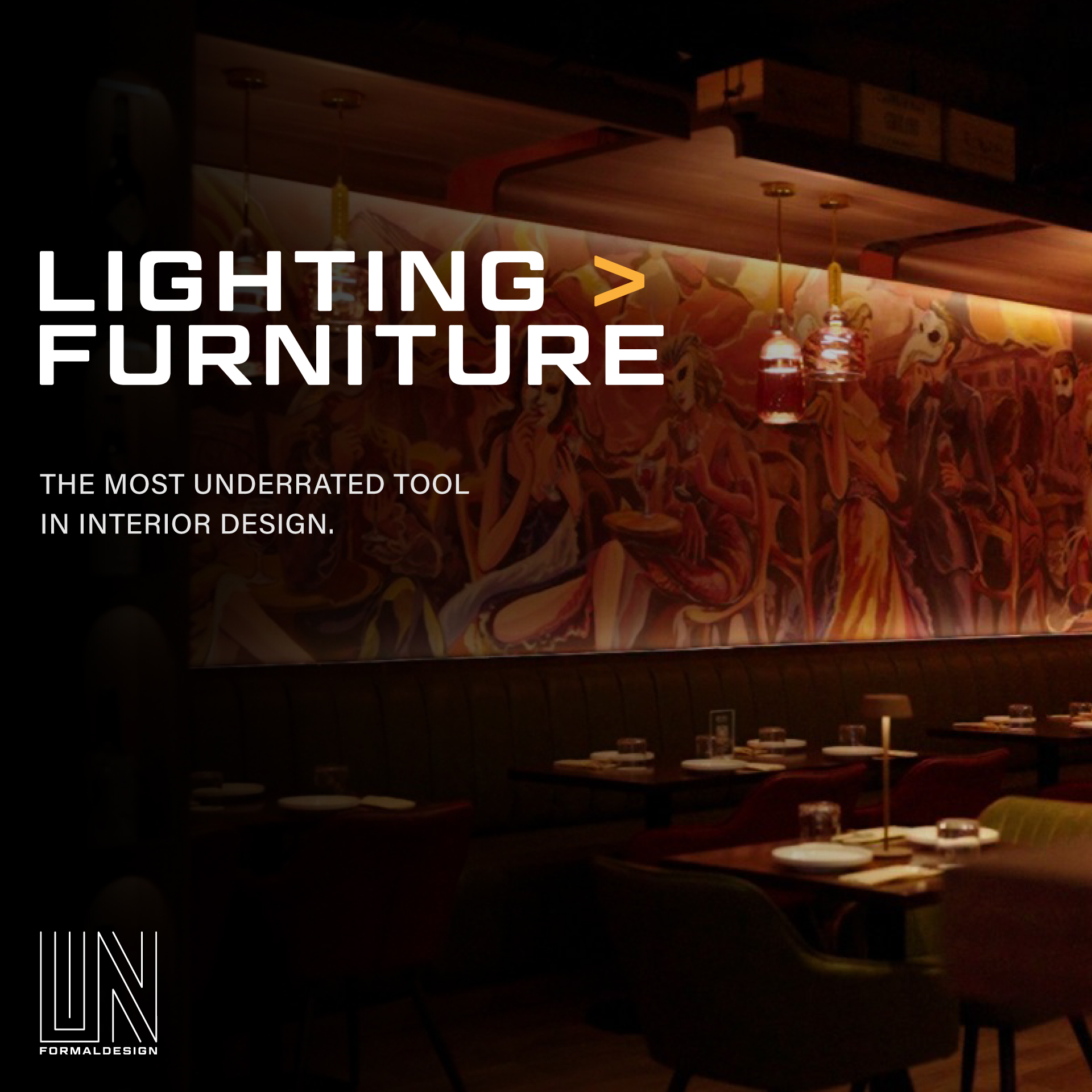



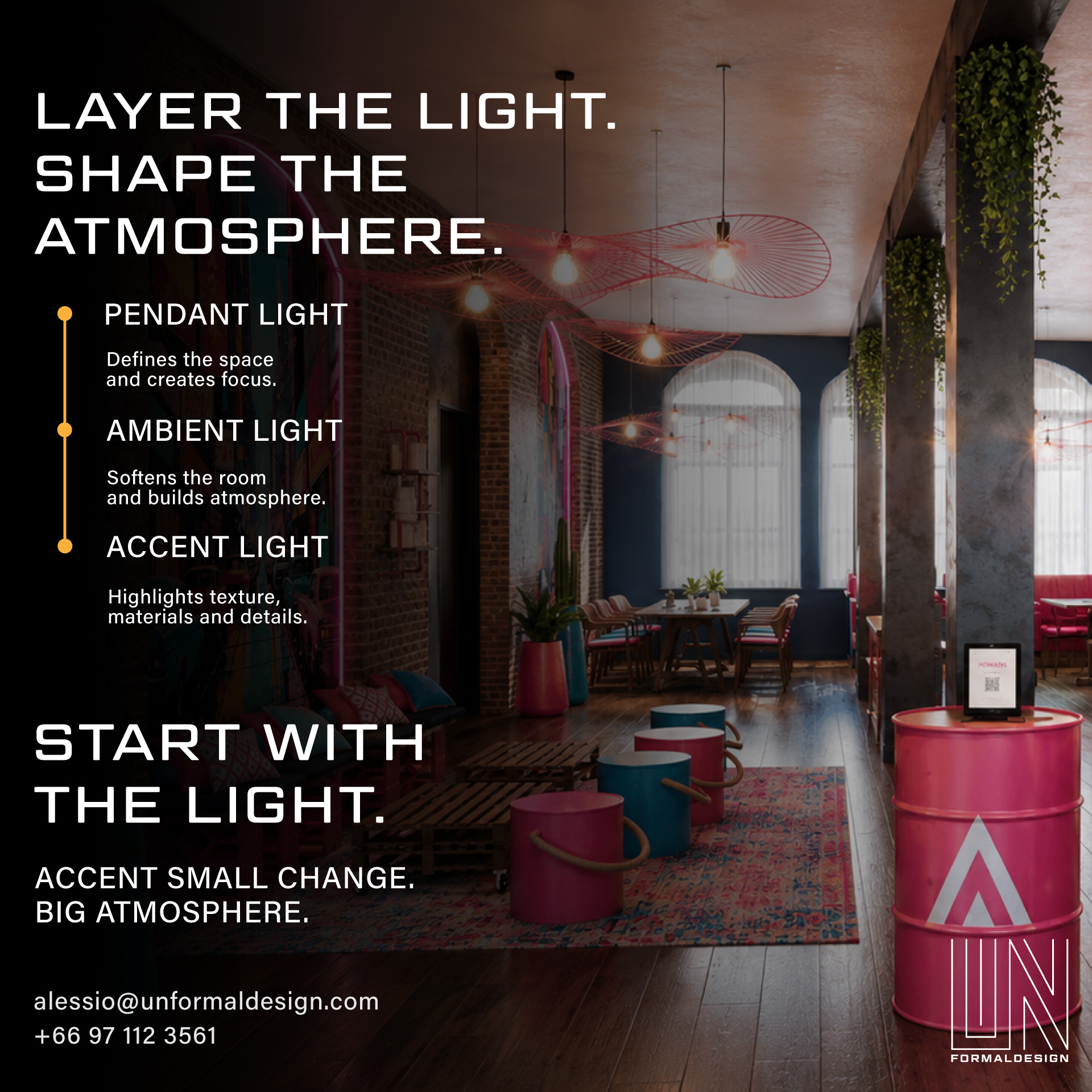
Ask what actually changes how a room feels — not what a magazine spread suggests should change it — and the honest answer is lighting, not furniture. In hospitality and F&B interiors, lighting carries more weight in shaping guest perception than almost any other line item in a design budget, and it is routinely the cheapest one to get right. At Unformal Design, lighting strategy is one of the first conversations on any project, not a finishing touch applied after the furniture plan is locked.
The Highest Impact-to-Cost Decision in the Room
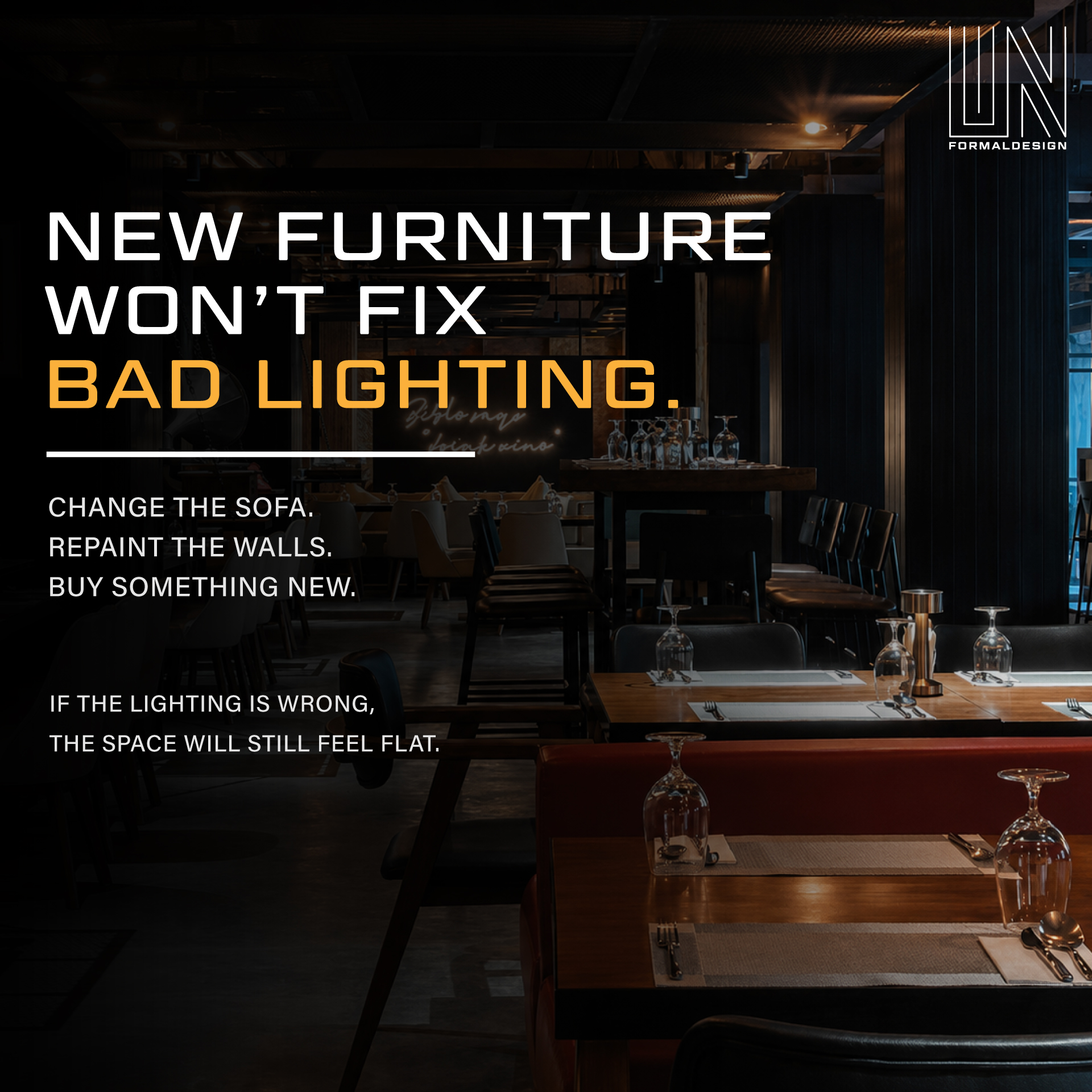
Furniture gets the budget and the attention. Lighting gets an afterthought — a few downlights specified late, adjusted only if something looks obviously wrong on-site. That ordering is backwards. A well-lit space with modest furniture reads as considered and warm; a poorly lit space with expensive furniture reads as flat and cold, regardless of what it cost. Lighting is also, relative to its impact, inexpensive: a lighting plan is a fraction of a furniture budget, but does more to determine whether a guest wants to stay.
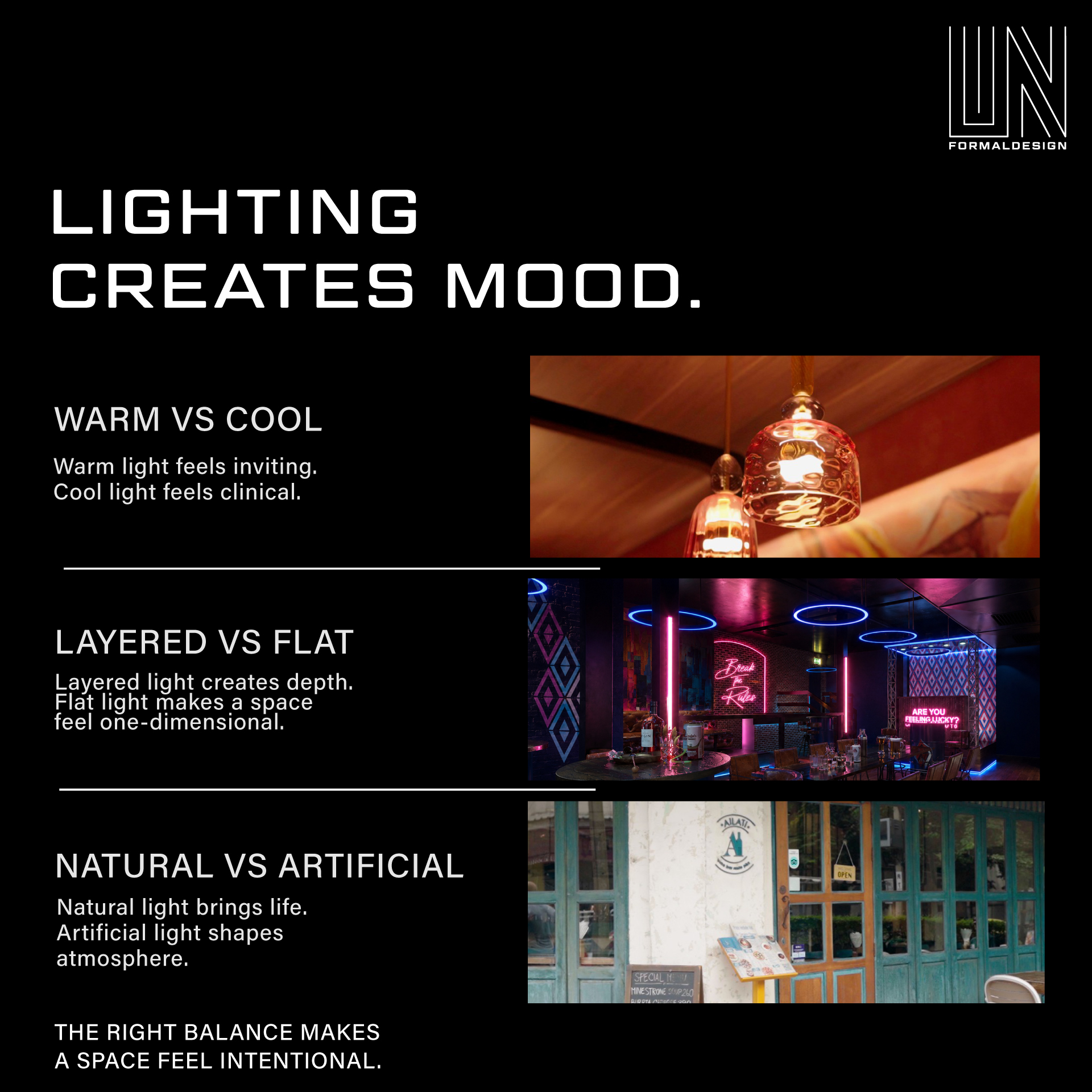
Warm vs Cool, Layered vs Flat, Natural vs Artificial
Three decisions do most of the work in any lighting plan:
- Colour temperature. Warm light (2700-3000K) reads as hospitable and relaxed; cool light (4000K+) reads as clinical and efficient. Most F&B and hospitality spaces should default warm, reserving cool light for task-specific zones like kitchens.
- Layering. A single ceiling-mounted source flattens a room. Layering ambient, task and accent light — a wash on a textured wall, a pendant over a table, a hidden strip under a bar counter — creates depth that a single source never can.
- Natural vs artificial balance. Daylight changes throughout service hours. A lighting plan that only accounts for evening artificial light will feel wrong at lunch, and vice versa — the plan has to work across the full operating day.
Why Furniture Gets the Credit Lighting Deserves
Furniture is easy to photograph and easy to point to in a brief — “we want a sofa like this.” Lighting is invisible when done well and only noticed when done badly, which is part of why it gets under-invested. But guests respond to lighting whether or not they can name it: it is the single biggest driver of whether a space feels like somewhere to linger or somewhere to leave quickly.
What This Looks Like in Practice
This is the same principle behind a project like Unformal’s Warehouse concept in Phuket, where a warehouse-style wine-and-dine space relies on layered lighting — pendant fixtures over the bar, ambient washes across raw brick and concrete — to do most of the atmosphere-building work that a smaller furniture budget alone couldn’t achieve.
Why This Matters for Operators
For F&B and hospitality operators planning a fit-out in Thailand, reordering the brief — lighting strategy before furniture selection — changes what a design budget actually buys. A space that feels expensive without an expensive furniture bill is not a trick; it’s the result of treating lighting as a structural decision, not a decorative one.
Contact Unformal Design at alessio@unformaldesign.com or via WhatsApp at +66 97 112 3561 to discuss the lighting strategy behind your next hospitality or F&B fit-out in Thailand.
Frequently Asked Questions
Why does lighting matter more than furniture in interior design? Lighting has a higher impact-to-cost ratio than almost any other design decision — it shapes how warm, expensive or welcoming a space feels, and it’s typically far cheaper to specify correctly than a furniture plan is to execute.
What’s the difference between warm and cool lighting in hospitality design? Warm light (2700-3000K) reads as relaxed and hospitable, suited to most F&B and hospitality settings. Cool light (4000K+) reads as clinical and efficient, better suited to task-specific zones like kitchens than to guest-facing areas.
What does “layered lighting” mean in practice? It means combining ambient, task and accent light sources — for example a wall wash, a pendant over a table, and a hidden strip light — instead of relying on a single ceiling-mounted source that flattens the room.
How does Unformal Design approach lighting in a project brief? Lighting strategy is discussed at the start of a project, alongside layout and material decisions, rather than being finalised late as a decorative afterthought once furniture and finishes are already locked.