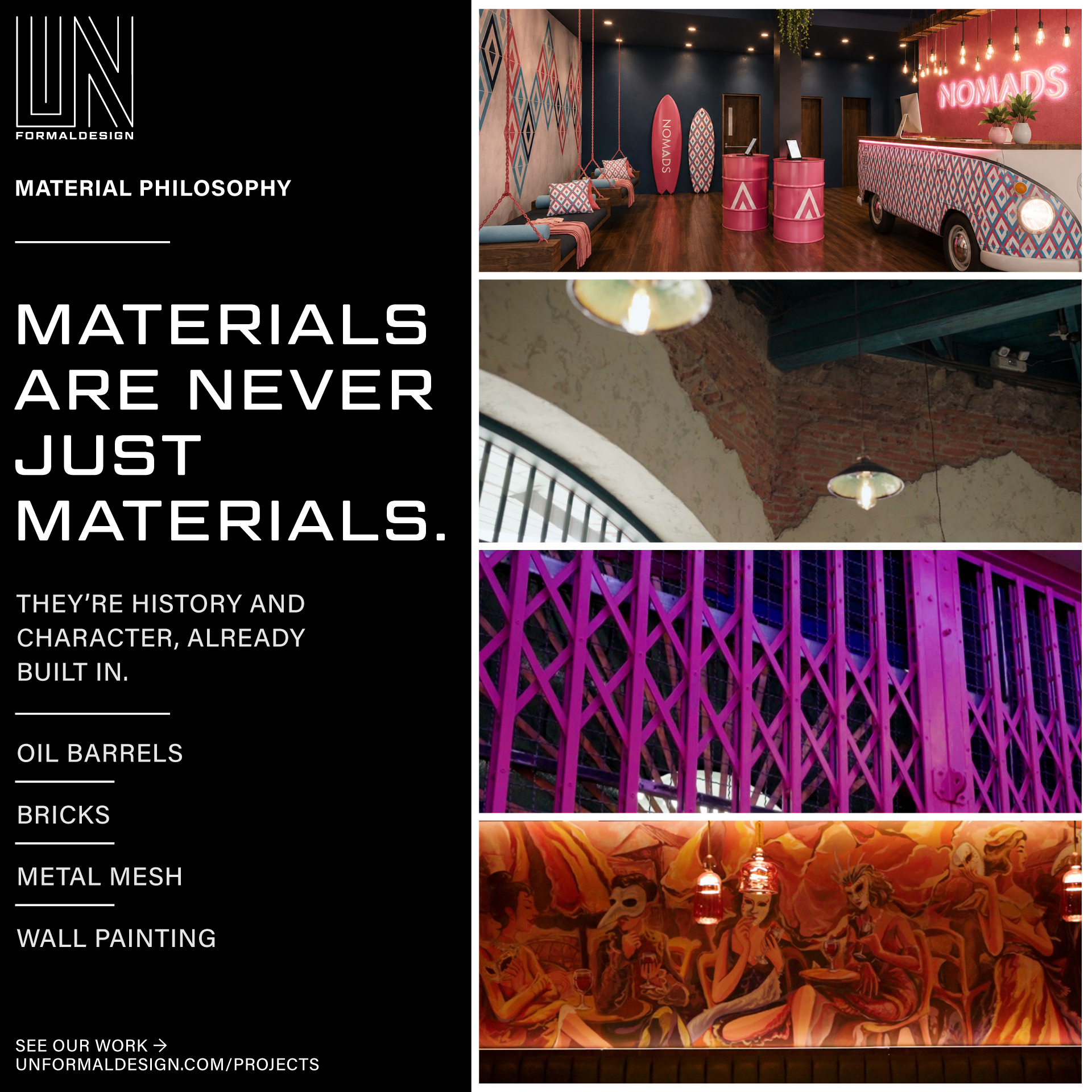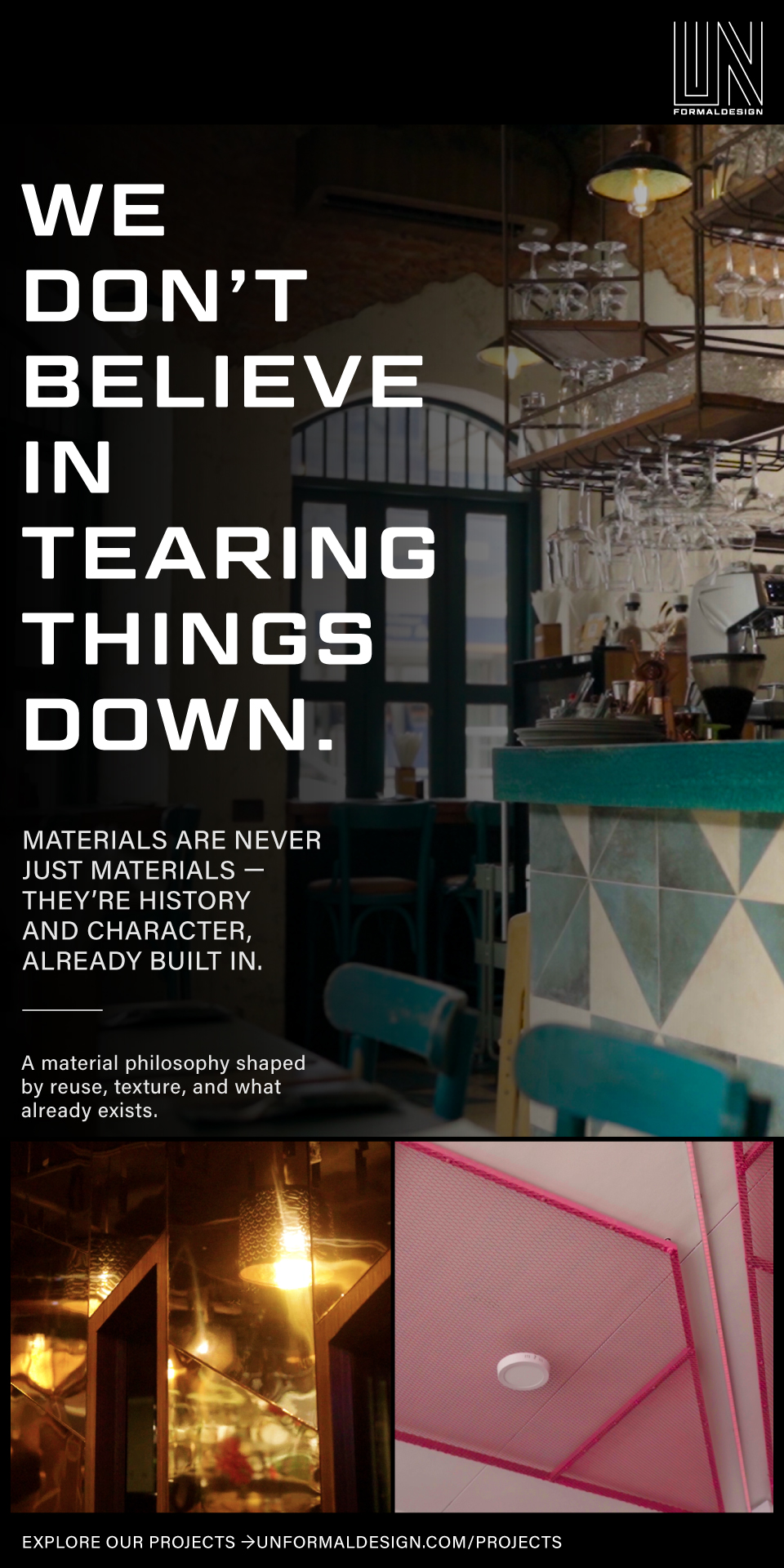



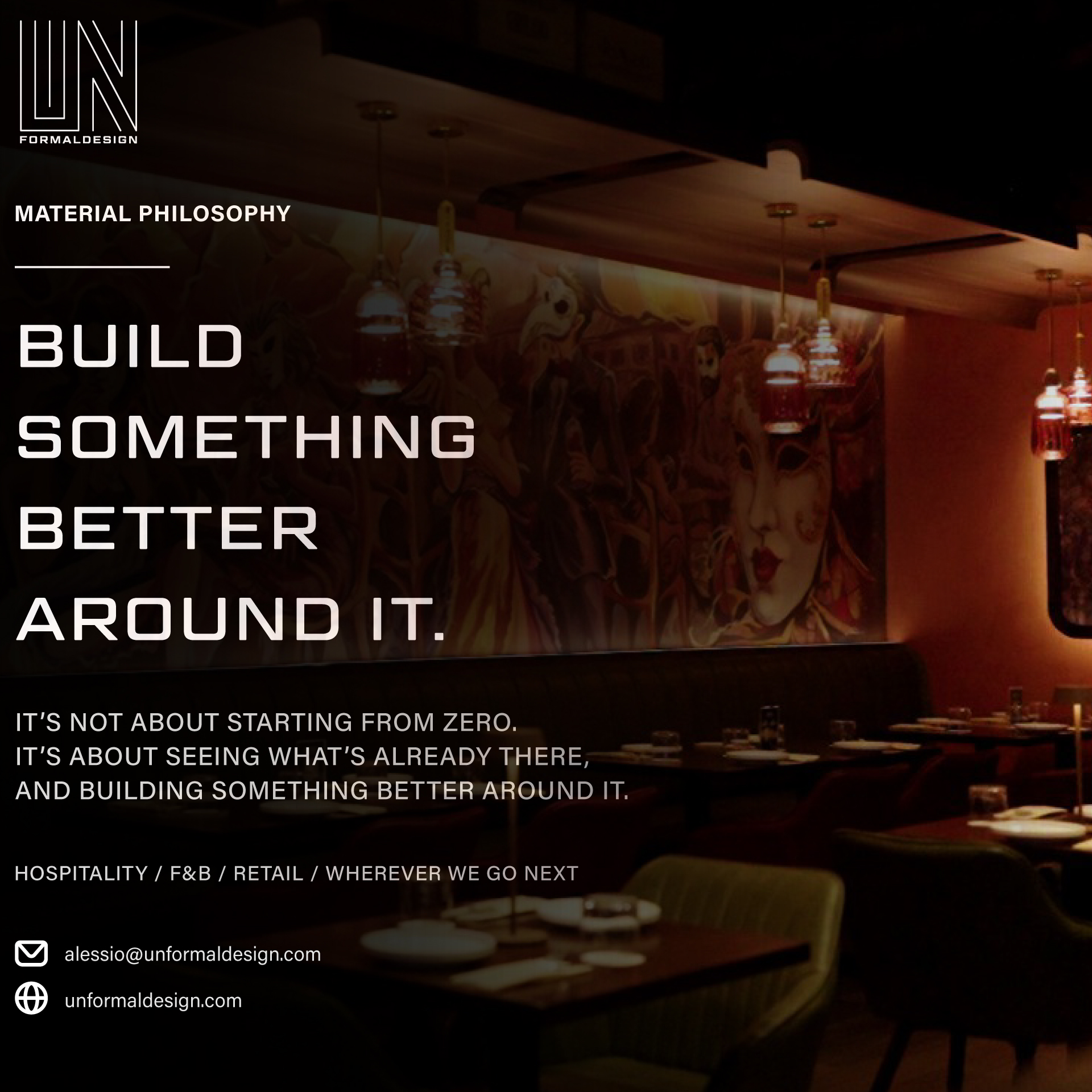
Material-led design reuses before it replaces: before demolishing anything, it asks what the site already has and whether it’s worth keeping. Warehouse Wine & Dine — a 1,000sqm industrial F&B venue Unformal Design delivered in Phuket — was built on that principle, around reclaimed brick, exposed concrete and steel mesh.
Most fit-outs do the opposite: strip the site to a shell, then build a new look on top. Unformal Design, the Bangkok studio led by architect Alessio Carta, starts from what’s already there — reclaimed brick and timber, repurposed industrial pipes, pallets, oil barrels. Materials most teams treat as waste are the starting point of the brief.
Here, reuse is a system, not a mood.
Why Reused Materials Read as More Expensive, Not Less
Clients often assume reclaimed materials are a budget compromise. In practice, the opposite tends to be true. New materials look finished on day one and age unpredictably after. Reclaimed materials arrive with texture, wear, and history already built in — the “expensive” look that new finishes spend years trying to fake. At Warehouse Wine & Dine, the reclaimed brick and exposed concrete were selected precisely because a tropical Phuket climate deepens their character over time instead of degrading it.
How Reclaimed Materials Age at Warehouse Wine & Dine
The material palette was chosen for one requirement above all: it had to perform better as it ages, not worse. That eliminates any material that looks best on opening day.
| Material | Role in the space | Ageing behaviour |
|---|---|---|
| Exposed concrete | Structural wall finish, floor base | Develops tonal variation and micro-texture with age |
| Reclaimed brick | Partition walls, bar backing | Colour deepens with patina; improves over years |
| Steel mesh | Zone dividers, mezzanine balustrades | Surface oxidation reinforces the industrial character |
| Pallets & oil barrels | Bars, furniture, wall features | Raw industrial identity; wears in rather than out |
Material as Strategy, Not Decoration
Choosing materials this way is a strategic decision, made early, not a finishing touch added at the end:
- Ageing behaviour: reclaimed and raw materials are chosen knowing how they’ll wear over years of service, not just how they photograph on opening day.
- Maintenance cost: materials selected for durability under real hospitality traffic, not just visual appeal.
- Mood control: raw, exposed materials set an atmosphere — honest, unpolished, lived-in — that heavily finished interiors can’t replicate.
- Sourcing discipline: sourcing pallets, oil barrels, and reclaimed timber requires the same rigour as sourcing any premium finish, just from a different supply chain.
Reuse-First Is a Portfolio-Wide Discipline
This isn’t a one-off gimmick applied to a single space. It’s the material system behind Unformal Design’s portfolio — from the 1,000sqm industrial floor of Warehouse Wine & Dine in Phuket to the heritage restraint of AILATI in Bang Rak, Bangkok. The specific materials change with the site; the discipline of building around what’s already there does not.
Why This Matters for Clients Planning a Space
Choosing wrong on materials doesn’t just look wrong — it ages badly and costs more to maintain over the life of the space. A reuse-first material strategy, decided at the concept stage, is what keeps a space feeling intentional years after opening rather than dated within two.
Planning a hospitality, F&B, or retail space in Bangkok, Phuket or elsewhere in Thailand? Talk to Unformal Design at alessio@unformaldesign.com or +66 97 112 3561.
Frequently Asked Questions (FAQ)
What is material-led interior design? It’s an approach where material choice — reclaimed brick, exposed concrete, repurposed industrial elements — drives the design brief from the start, instead of being selected after the layout and look are already decided. Unformal Design applied it end-to-end at Warehouse Wine & Dine in Phuket.
Are reclaimed materials cheaper than new finishes? Not necessarily. Sourcing genuine reclaimed materials takes as much effort as sourcing premium new ones. The value isn’t cost — it’s texture, history, and character that new materials can’t replicate on day one.
Does reused material design work outside F&B and hospitality? Yes. The same reuse-first discipline applies to retail, workspace, and residential projects — the specific materials shift with the site, but the underlying strategy doesn’t change.
Why choose reclaimed materials over new ones for a commercial space? Reclaimed and raw materials are selected knowing how they age and what they cost to maintain over years of real use, not just how they look at opening. In a tropical climate like Phuket’s, materials such as exposed concrete and reclaimed brick actually improve with age.