



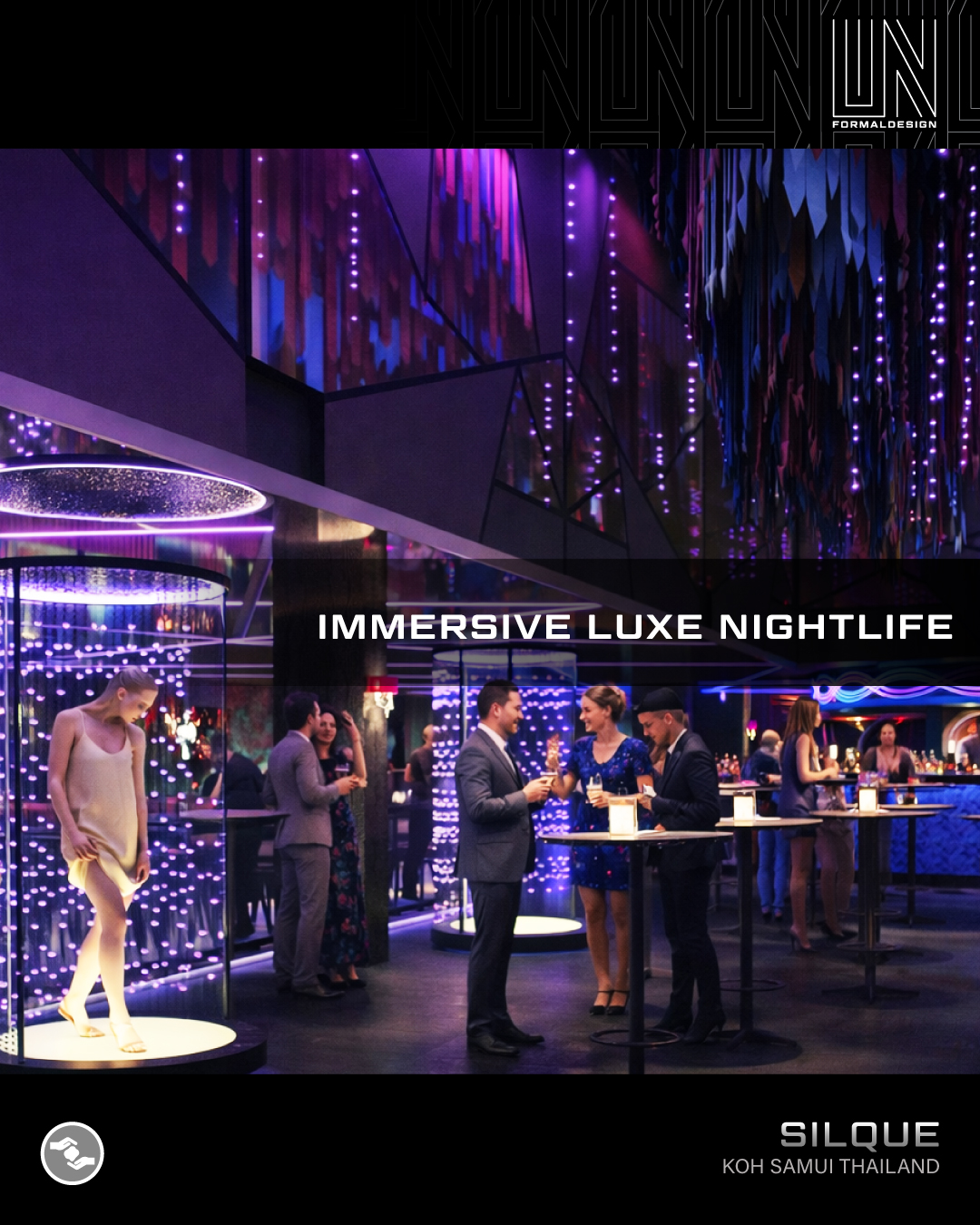
Nightlife interiors are not rooms. They’re stages for ritual. SILQUE is conceived as Koh Samui’s first indoor luxe nightclub with burlesque performances—designed as a layered environment of texture, reflection, and dramatic lighting.
The Anchor Move: One Defining Element That Holds the Room
A club needs one element that people remember even when they can’t photograph it perfectly. In SILQUE, that element is: thousands of hand-hung velvet strips cascading from the ceiling. They wrap the room in: colour, texture, movement—so the atmosphere feels alive.
5 Design Lessons for Nightclub Interiors in Thailand
Design Performance First
Stage logic influences: sightlines, crowd density, lighting positions.
Use Texture to Control Intimacy
Velvet and fabric absorb light. They create depth without needing more construction.
Mirrors Must Be Placed with Intent
Reflection can amplify: movement, light, perceived space. But random mirrors create chaos.
Build Lighting Scenes (not One Mood)
At minimum: early, peak, late.
Refine Touchpoints Even in a “raw” World
Nightclubs are high-impact. Edges, floors, and bar surfaces must be safe and durable.
Strategy Call
• City + location
• Venue type
• Rough floor area
• Opening timeline
FAQ
Q: What is the one thing that makes a hospitality interior memorable?
A: A clear feeling, expressed through light, material, and movement.
Q: How do you design for Thailand conditions?
A: Durable materials, refined touchpoints, ventilation/maintenance access, and lighting that works at low lux.
Q: What do you need to quote a project?
A: Location, approximate area, venue type, scope, timeline, and constraints.