

Most bars and clubs fail before opening night—on the plan.
Not because the layout is “wrong.” Because it’s designed like a restaurant: neat, logical, safe.
Nightlife doesn’t work like that.
In bar and nightclub design, atmosphere is the product. Layout is the support system.
UNFORMALDESIGN is a hospitality + F&B design studio based in Thailand. Our approach is raw but refined—industrial, vibrant, human. We design immersive nightlife interiors by writing the sensory script first, then engineering the space so staff can run it at speed.
What “atmosphere” Means in a Bar/Club (one Clean Definition)
Atmosphere is the controlled mix of light, sound, density, temperature, texture, and movement that makes guests feel a specific way.
If you can’t describe the feeling in one sentence, you can’t design it.
Examples:
- “Dark pressure with flashes of color. Like a basement that became a ritual.”
- “Warm chaos. Neon, patina, and a bar that feels like a stage.”
- “Intimate shadows with a bright core—people watching people.”
The Atmosphere-first Framework (7 Layers)
Write the Sensory Script (before Drawing Walls)
You’re designing a sequence, not a room.
Write 10 lines:
- What guests see at the door
- How it feels at the first step
- Where the eye lands
- Where the first drink happens
- What happens when it gets busy
- Where intimacy lives
- Where energy peaks
- Where staff moves fast
- How people leave
- What they remember
This is your atmosphere brief.
Control Light Like a DJ Controls Tempo
Lighting is not decoration. It’s pacing.
Key moves:
- Contrast zones: bright-to-dark transitions that feel cinematic
- Face light vs background: people want to look good, but not exposed
- Low glare: keep the vibe, protect the eyes
- Programmable scenes: early, peak, late (3 moods minimum)
If you can only afford one thing: lighting control.
Sound Is Architecture (treat It That Way)
Bad sound kills immersion.
Design with:
- Surfaces that absorb where you need conversation
- Surfaces that reflect where you want energy
- Hidden cable runs and speaker integration
- Bass management (structure + neighbors)
A nightclub without acoustic thinking becomes a problem, not a place.
Design Density (how Tight Is “tight”)
Nightlife is about controlled proximity.
Too open → no tension
Too tight → frustration, slow service, safety risk
We map:
- Queue pressure points
- Bar ordering zones
- Escape routes
- Toilets as an experience (yes)
Build a Bar That Performs
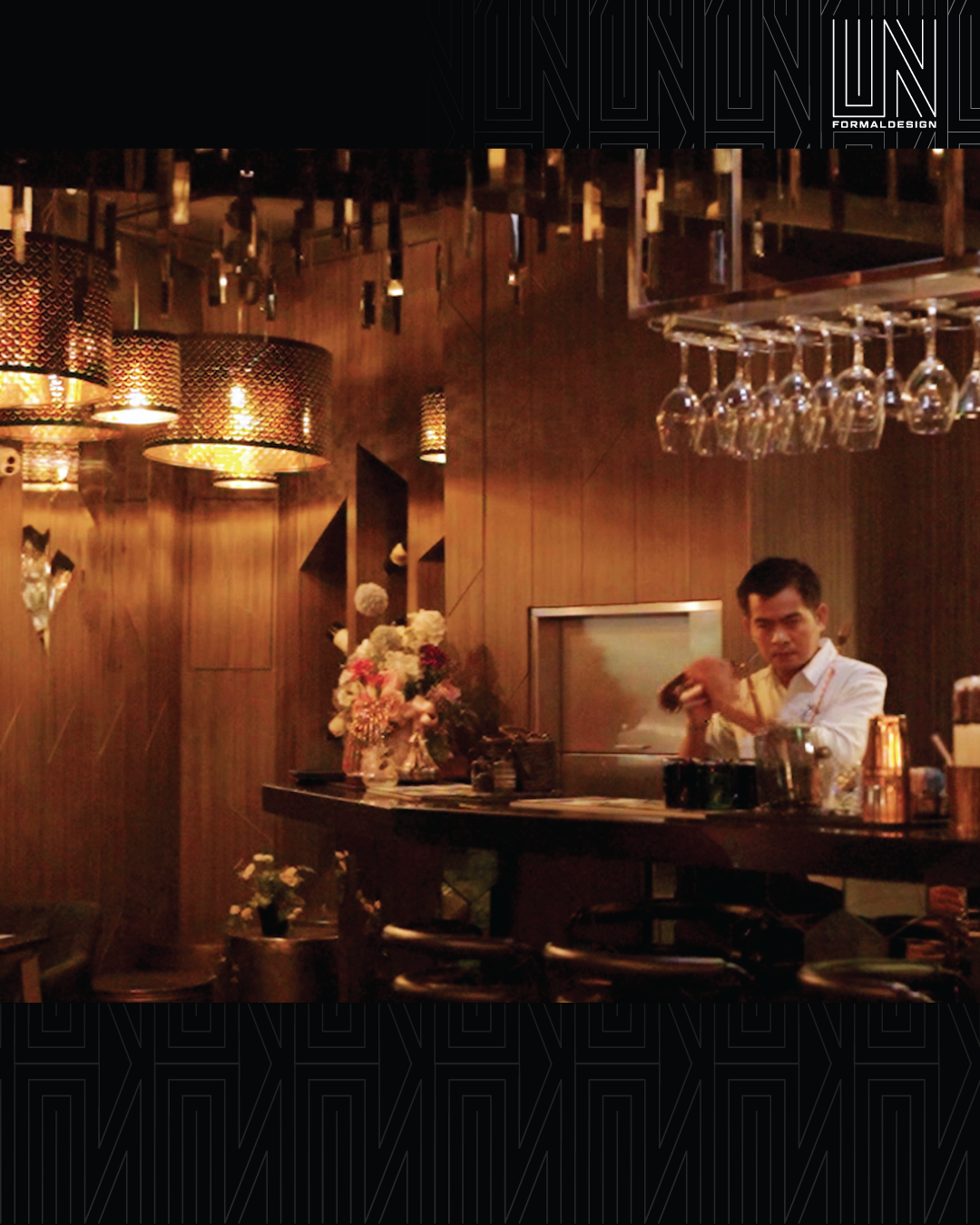
The bar is the engine.
Atmosphere-first doesn’t mean operation-last. It means operation supports the vibe.
Checklist:
- Clear service line
- Back bar layout designed for speed
- Surfaces that can take impact, spills, humidity
- Lighting that frames the bartender like a performer
Use Material Friction (raw vs Refined)
The “street vibe” isn’t a costume.
Use real textures:
- Exposed brick / cement / metal
- Layered paint or patina surfaces
- Industrial modules re-imagined (not “reclaimed” as a trend)
Then refine it:
- Clean junctions where the hand touches
- Safe edges, stable floors
- Maintenance logic
That’s the UNFORMALDESIGN tension: alive, but buildable.
Create One Iconic Anchor (not a Room Full of Noise)
A nightlife venue needs one anchor that people remember.
Examples:
- A feature wall that catches light in a way photos can’t explain
- A bar face with a modular rhythm
- A ceiling element that changes density across the room
One anchor, then let the rest breathe.
“layout Second” Doesn’t Mean “layout Late”
It means:
- Lock the atmosphere brief
- Define the anchor + core vibe
- Design circulation and operations around it
When you do it in reverse, the plan dictates the feeling—and nightlife becomes generic.
Common Mistakes in Night Club Interior Design (and What to Do Instead)
Mistake 1: Uniform Brightness
Fix: build contrast zones + programmable scenes.
Mistake 2: Straight-line Circulation
Fix: add compression/release moments. Let people discover the space.
Mistake 3: Too Many “features”
Fix: one iconic anchor. Everything else supports it.
Mistake 4: Acoustic Problems Ignored
Fix: treat sound as part of architecture from day one.
Mistake 5: the Bar Is an Afterthought
Fix: bar performance is part of atmosphere. Design it as an engine.
A Simple Planning Template (copy/paste)
Use this when briefing any interior designer in Bangkok/Thailand:
- Venue type: (cocktail bar / club / listening bar / hybrid)
- Target feeling in 1 sentence:
- Peak capacity (standing + seated):
- Scenes needed: (early / peak / late) + hours
- Music profile: (live / DJ / playlist) + loudness target
- One iconic anchor:
- Must-keep constraints: (existing structure, ceiling height, neighbors)
- Budget reality: (low / medium / high) + what matters most
Atmosphere Workshop
• Book a 60-minute Atmosphere Workshop to lock the one-sentence feeling (before layout).
• You’ll leave with: vibe brief, anchor move, lighting scenes, and a layout direction.
FAQ
Q: What is the first step in nightclub design?
A: Define the one-sentence feeling and sensory script before layout.
Q: How many lighting scenes do we need?
A: Minimum three: early, peak, late—plus a simple control system.
Q: How do you keep operations fast at the bar?
A: Design the service line, storage logic, and bartender lighting as part of atmosphere.